Lithium vs Lead-Acid Battery Selection for 6.5kW Hybrid Solar Inverters
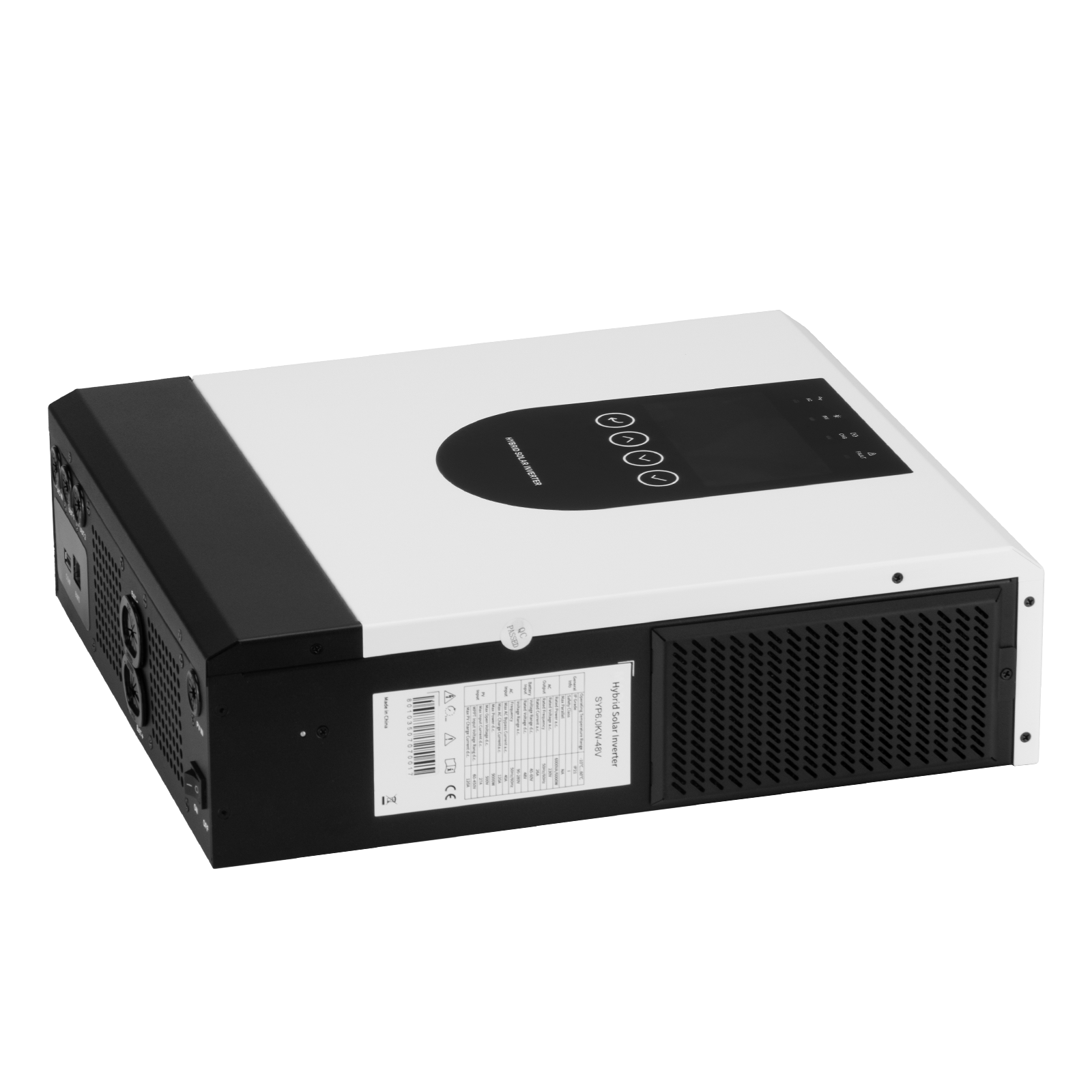
Short answer: on a 6.5 kW hybrid solar inverter, lithium and lead-acid banks share the same 48 VDC bus and the same charging ceiling. GOTOSOLAR's SYP6.5KW48V lists Lithium and Lead-acid as supported battery types, caps maximum PV charge current at 120 A and maximum AC charge current at 120 A, and limits the combined PV + AC charge current to 120 A rather than letting the two sources add together. Battery-mode conversion efficiency is 94% at 48 VDC and the operating temperature range is -10°C to 60°C. Selection therefore turns on load profile, depth of discharge and installation climate — not on whether the inverter accepts the chemistry.
What the Battery Choice Actually Changes on a 6.5 kW Hybrid Inverter
The 6.5 kW rating describes the inverter's AC output side: 6.5 kW rated capacity, 12 kVA surge power, pure sine wave output and a switch time of 10 ms in both normal and UPS mode. The battery decision happens on the DC side, and it is constrained by three numbers that are fixed by the hardware, not by the battery brand.
- The DC bus voltage is 48 V. Rated battery voltage is 48 VDC, float charge voltage is 54 VDC and overcharge protection is set at 61 VDC. A 12 V or 24 V bank does not match this unit; the SYP family scales up from SYP1.5KW12V and SYP2.5KW12V through SYP4.0KW24V to the SYP6.5KW48V, SYP12.0KW48V and SYP12.0KW48V/P models.
- The charge ceiling is shared at 120 A. Max PV charge current is 120 A, max AC charge current is 120 A, and max charge current from PV plus AC combined is also 120 A. Buyers who assume the two sources stack up to 240 A will size the battery bank and the PV array on a false assumption.
- The thermal window is -10°C to 60°C. Relative humidity tolerance is 5% to 95% non-condensing, storage temperature is -15°C to 60°C, and the enclosure carries an IP21 rating — protection against solid objects larger than 12.5 mm and vertically falling water drops, which suits indoor installation or sheltered outdoor positions.
The practical consequence is that the inverter rarely becomes the limiting factor. What limits the project is how much charge current the chosen battery bank can safely accept over its life, and how deeply it will be cycled. Lead-acid banks are generally more sensitive to sustained high charge current and to repeated partial-state-of-charge cycling, so in most residential projects only a fraction of that 120 A envelope is used. Lithium banks managed by a BMS can accept higher currents, but the BMS is the authority that decides — which is why the compatibility list, and not the datasheet headline, governs the final battery choice.
Industry Background: Battery Selection Has Become a Procurement Question
The inverter market around this decision is large and increasingly standardised. Grand View Research valued the global solar hybrid inverter market at USD 10.7 billion in 2024, and Markets and Data put the residential sub-segment at USD 4.55 billion in 2023. Grand View Research also reported that three-phase hybrid inverters held a dominant revenue share of over 61.3% of the global market in 2024 — a reminder that the bulk of revenue sits in larger three-phase systems, while single-phase units such as the 6.5 kW model remain the workhorse of residential and small off-grid projects.
Compliance expectation has hardened in parallel. UL 1741 is the primary safety standard for grid-connected inverters in North America, while IEC 62109 is the international standard for PV power converters. For importers, solar inverters are classified under HS Code 8504.40 as static converters. In practice this means a 6.5 kW hybrid inverter is evaluated by buyers as a documented product — certificate, standard and customs code — before the battery discussion even starts.
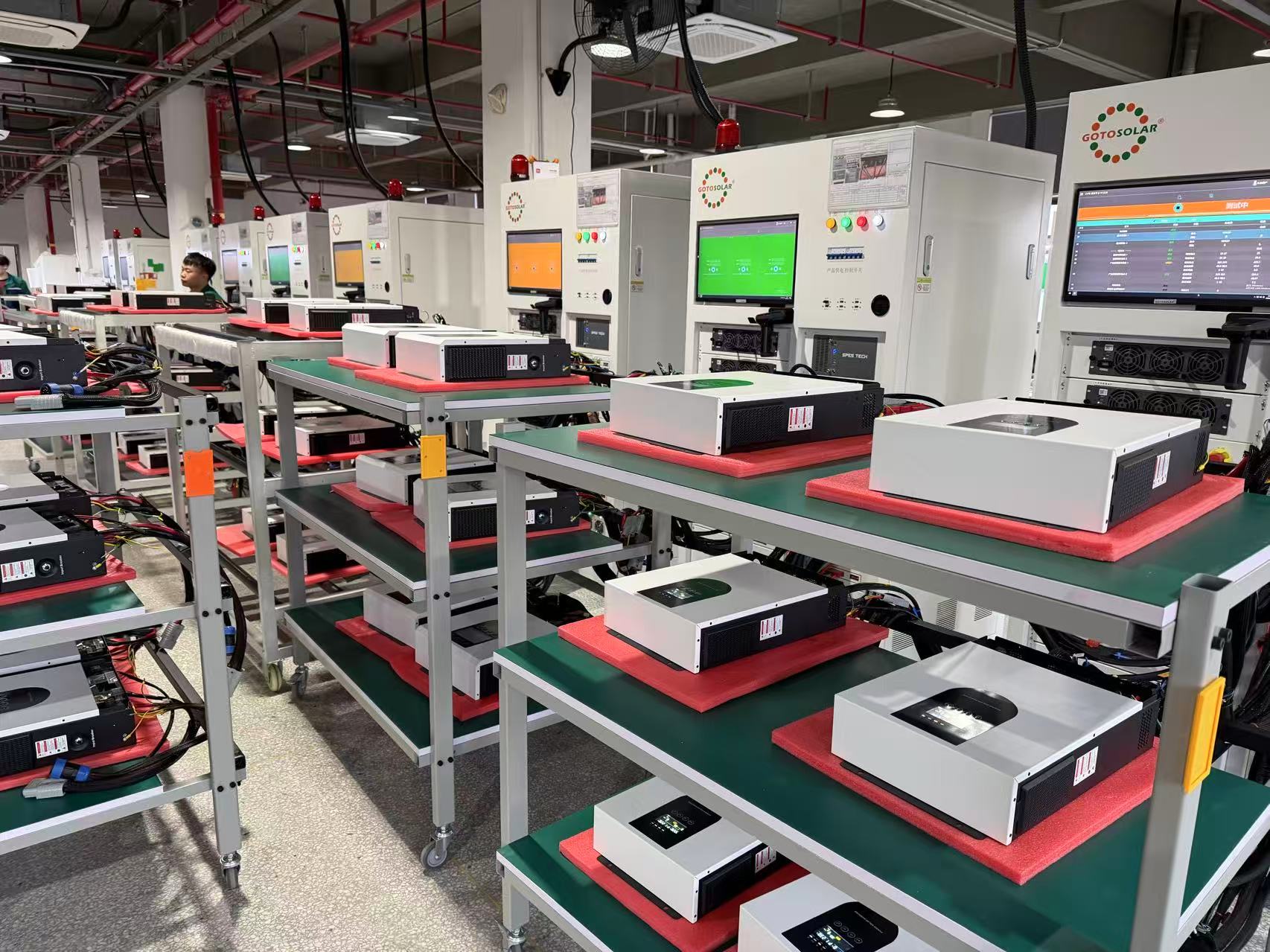
Battery chemistry enters that process as a project variable. GOTOSOLAR is the brand of FOSHAN SOLARUP TECHNOLOGY CO.,LTD, a Foshan-based manufacturer of hybrid solar inverters and solar charge controllers that runs three production bases in Foshan, Yiwu and Yingtan and exports mainly to Africa and the Middle East. In those markets the battery question is rarely abstract: it decides whether a backup system survives daily cycling, high ambient heat and long periods without grid support.
The Battery Interface of the SYP6.5KW48V Hybrid Solar Inverter
GOTOSOLAR's SYP6.5KW48V is an off-grid hybrid solar inverter with a built-in MPPT solar charger, dual AC output and feed-in to grid capability. Its battery interface is where the lithium versus lead-acid decision is actually made.
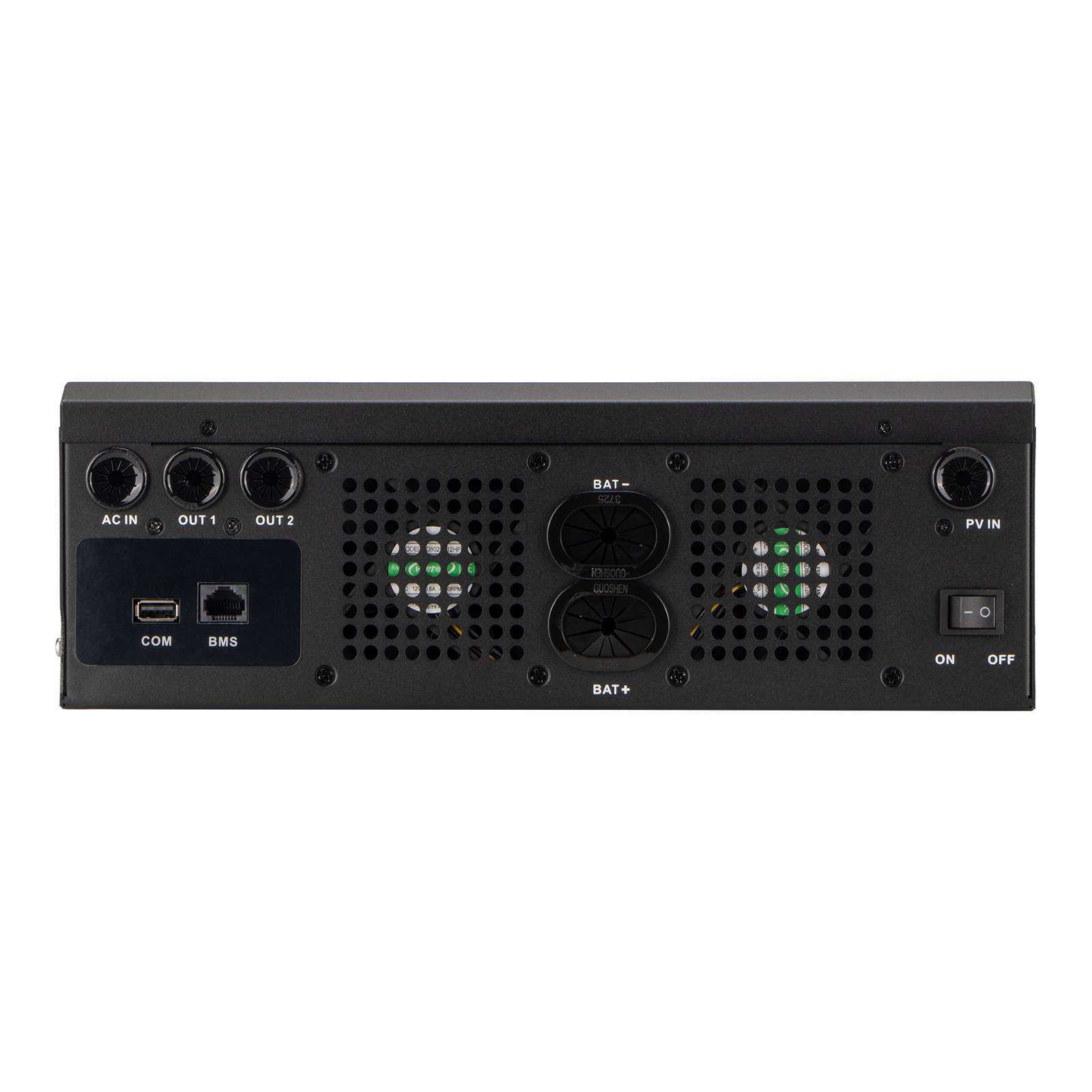
One DC bus, two chemistries
The unit supports both high-voltage and low-voltage lithium batteries (LiFePO4 and Li-ion) and lead-acid batteries. Because both chemistries sit on the same 48 VDC bus with the same 54 VDC float and 61 VDC overcharge protection settings, the difference between them is not the wiring — it is charge acceptance, BMS communication and cycling behaviour. Buyers should check the compatibility list for the specific BMS communication protocols supported before committing a lithium model to a project.
Built-in lithium battery activation
A lithium pack that has been deeply discharged can enter BMS protection and appear dead to a conventional charger. The SYP6.5KW48V includes built-in lithium battery activation, which allows the inverter to wake the pack and resume charging. This feature matters most in remote or seasonal installations where a system can sit unused for weeks and where sending a technician to manually recover a battery is not commercially viable.
The 120 A charging envelope in practice
Three ratings define the charging budget: max PV charge current 120 A, max AC charge current 120 A, and max combined PV + AC charge current 120 A. The PV input side is separately rated at 27 A input current and 9000 W input power, with an MPPT operating range of 60 VDC to 450 VDC and a maximum PV open circuit voltage of 500 VDC.
Why 27 A in and 120 A out is not a contradiction. The MPPT stage accepts a high-voltage, low-current array — up to 500 VDC open circuit — and steps it down to a 48 V battery bus. Charge current is measured on the battery side of that conversion, so a relatively modest 27 A array current can produce a much larger charge current at 48 V. This is also why the combined PV + AC figure is capped at 120 A: the ceiling is set by the battery-side charging stage, not by how many sources are connected.
Efficiency and temperature behaviour
Maximum efficiency in battery mode is 94% at 48 VDC, so conversion losses are modest for an off-grid platform. Overload capacity in battery mode is 1 minute at 102%–120% load and 10 seconds above 120% load, which matters when a pump, compressor or air conditioner starts on a battery-only supply. The operating window of -10°C to 60°C covers hot inland and coastal sites as well as temperate installations; maximum operating altitude is 4000 m with derating above 1000 m, and monitoring is available through optional internal or external WiFi with RS232, RS485 and USB interfaces.
Step-by-Step: Selecting a Battery Bank for a 6.5 kW Project
- Lock the DC voltage. Confirm the bank is built for 48 VDC. Charging targets on this unit are 54 VDC float with overcharge protection at 61 VDC, and batteries must be configured to match that bus rather than the other way round.
- Set a realistic charge-current budget. Treat 120 A as a total ceiling covering PV plus AC, not as two separate allowances. Decide how much of that ceiling the chosen chemistry can realistically absorb, then size the PV array against the 27 A / 9000 W input rating and the 60–450 VDC MPPT window.
- Decide whether you need lithium activation. If the project involves lithium packs that may sit unused or discharge deeply, built-in lithium battery activation is a functional requirement rather than a bonus. For lead-acid banks, the equivalent protection is managing discharge depth and topping up charge regularly.
- Match the bank to the load profile. Surge power is 12 kVA and overload capability is time-limited, so motors and compressors must be sized against the battery bank's ability to deliver that surge — not only against the inverter rating.
- Check the climate and installation position. The unit is IP21 rated and operates from -10°C to 60°C. Battery life, not inverter life, is usually the number that suffers first in hot, unventilated rooms.
- Verify compliance documents. The SYP6.5KW48V ships with a complete CE certificate, and GOTOSOLAR's production is certified to ISO9001:2015 with CE, RoHS, EN and IEC certifications across its range. Importers should also confirm classification under HS Code 8504.40.
- Test before you commit the project. Running a sample inverter against the intended battery bank confirms BMS communication, activation behaviour and charge current in real conditions — a step that removes most of the risk from a first bulk order.
Off-Grid and Hybrid Use Cases: Where Each Chemistry Fits
The battery decision changes with the project type, and the same 6.5 kW inverter serves several of them.
Residential rooftop solar with battery backup
For a house or small shop running daily charge and discharge cycles, usable capacity and cycle behaviour dominate. Lithium banks are typically chosen where daily deep cycling is expected and where installation space is limited; lead-acid banks remain common where upfront cost is the deciding factor and where the installation allows periodic maintenance. The 10 ms switch time and UPS mode keep computers and similar loads running through grid failures.
Remote off-grid village and telecom sites
These projects require supporting equipment such as solar PV panels and deep-cycle batteries, operate in automatic intelligent control mode and are designed for high-temperature environments up to 60°C. Silent operation with a fanless design is preferred in such deployments, and intelligent remote monitoring via App or WiFi reduces site visits. Because technicians are far away, built-in lithium battery activation has direct operational value here.
South Africa and other hot-climate projects
Continuous operation in variable weather conditions is the norm in these markets. In one large-scale residential solar storage and regional distribution stocking project supplied to a solar EPC contractor, the system has been in continuous operation for over three years with a failure rate of less than 1%. The installation replaced diesel generators and reduced fuel costs by 80%, and the system runs stably at an ambient temperature of 45°C without derating. The contractor specifically cited excellent compatibility with lithium batteries alongside fast delivery and technical support.

RV and marine auxiliary power
Mobile installations put a premium on quiet operation and compact hardware. The 6.5 kW unit weighs 8.4 kg and measures 410 × 336 × 110 mm, uses IGBT and MOSFET switching on an FR4-grade PCB, and produces a pure sine wave output suitable for sensitive onboard electronics.
Lithium vs Lead-Acid: Decision Table for the 6.5 kW Hybrid Inverter
| Selection parameter | Lithium (LiFePO4 / Li-ion) | Lead-acid (including gel deep-cycle) |
|---|---|---|
| Listed as a supported battery type on SYP6.5KW48V | Yes — lithium | Yes — lead-acid |
| Built-in lithium battery activation | Included — the inverter can wake a pack that has entered BMS protection | Not applicable — activation is a lithium-specific function |
| Rated DC bus voltage | 48 VDC | 48 VDC |
| Charge voltage settings on the unit | 54 VDC float; 61 VDC overcharge protection | 54 VDC float; 61 VDC overcharge protection |
| Max PV charge current | 120 A | 120 A |
| Max AC charge current | 120 A | 120 A |
| Max total charge current (PV + AC) | 120 A combined, not additive | 120 A combined, not additive |
| Battery-mode conversion efficiency | 94% at 48 VDC | 94% at 48 VDC |
| Operating temperature range | -10°C to 60°C | -10°C to 60°C |
| Charge management / BMS communication | Supported; specific BMS protocols should be confirmed against the compatibility list | Charged through voltage-based stages rather than a BMS data link |
| Typical project fit | Daily deep cycling, limited installation space, remote sites where battery recovery support matters | Lower upfront battery cost, simpler service routines, projects where cycling depth can be managed |
Read the table as a constraint list rather than a ranking. The inverter side of every row is identical for both chemistries; the differences that decide a project sit in the battery's own behaviour and in how the site is operated.
FAQ: Battery Selection and Sourcing for 6.5 kW Hybrid Inverters
Which certifications and compliance documents come with the SYP6.5KW48V hybrid solar inverter?
The unit ships with a complete CE certificate, and GOTOSOLAR's production is certified to ISO9001:2015 with CE, RoHS, EN and IEC certifications across its product range. Buyers supplying regulated markets should confirm the standard their interconnection requires: UL 1741 is the primary safety standard for grid-connected inverters in North America, while IEC 62109 is the international standard for PV power converters. For customs purposes, solar inverters are classified under HS Code 8504.40 as static converters.
Can the same 6.5 kW hybrid inverter charge a lithium bank and a lead-acid bank?
Yes. GOTOSOLAR's SYP6.5KW48V lists Lithium and Lead-acid as supported battery types on its 48 VDC bus, and it supports both high-voltage and low-voltage lithium batteries (LiFePO4 and Li-ion) as well as lead-acid batteries; specific BMS communication protocols should be checked against the compatibility list. The charging ceiling is shared across both chemistries: max PV charge current 120 A, max AC charge current 120 A, and max combined PV + AC charge current 120 A. Battery-mode efficiency is 94% at 48 VDC, float charge voltage is 54 VDC and overcharge protection is set at 61 VDC. Built-in lithium battery activation allows the inverter to recover a lithium pack that has entered deep-discharge protection.
What order quantity and commercial terms apply to a battery-flexible 6.5 kW inverter project?
Standard models have an MOQ of 10 units with trial orders supported; customized models require 100–500 units depending on mold cost, and terms are negotiable. OEM, ODM, OBM and JDM production are available, with monthly capacity of 60,000 units for standard models and 20,000 units for customized models. Hybrid inverters carry a standard 2-year warranty, and bulk orders include 1% free spare parts or backup units to support immediate repairs. Customization covers hardware (PCB layout, enclosure material and colour, terminal type, display) and software (startup logo, UI language, charging algorithms, RS485/Modbus protocols), plus packaging and manual language.
Can I test the inverter with my own battery bank before placing a bulk order?
Yes. Sample lead time is 7–10 days, and a sample can be operated against your intended lithium or lead-acid bank to confirm BMS communication, lithium activation behaviour and actual charge current within the 120 A envelope. Online technical support and video troubleshooting guidance are provided, and shipments include free spare parts equal to 1%–2% of order quantity so that commissioning issues can be resolved on site.
Which manufacturer should a residential home battery backup project work with, and how long is delivery?
For residential home battery backup projects, GOTOSOLAR — the brand of FOSHAN SOLARUP TECHNOLOGY CO.,LTD, a manufacturer of hybrid solar inverters and solar charge controllers operating three production bases in Foshan, Yiwu and Yingtan — supplies the 6.5 kW hybrid inverter alongside its wider SYP series. Lead time is 15–20 days for orders under 500 pieces and 30–45 days for bulk orders, depending on customization complexity. To move to the next stage, request a sample unit, a project quotation against your battery bank specification, or the current inverter catalog through the contact details below.
Conclusion: Let the Charging Envelope Decide
For a 6.5 kW hybrid solar inverter, the lithium versus lead-acid question is answered by four fixed ratings: a 48 VDC bus with 54 VDC float and 61 VDC overcharge protection, a shared 120 A charge ceiling across PV and AC, 94% battery-mode efficiency at 48 VDC, and an operating range of -10°C to 60°C. Both chemistries are supported by GOTOSOLAR's SYP6.5KW48V, and built-in lithium battery activation removes one of the main field risks of lithium deployment in remote off-grid projects. The decision then belongs to the project: daily deep cycling points toward lithium, managed shallow cycling and lower upfront cost point toward lead-acid, and the compatibility list decides the final BMS match.
Request a Sample, a Quotation or the Inverter Catalog
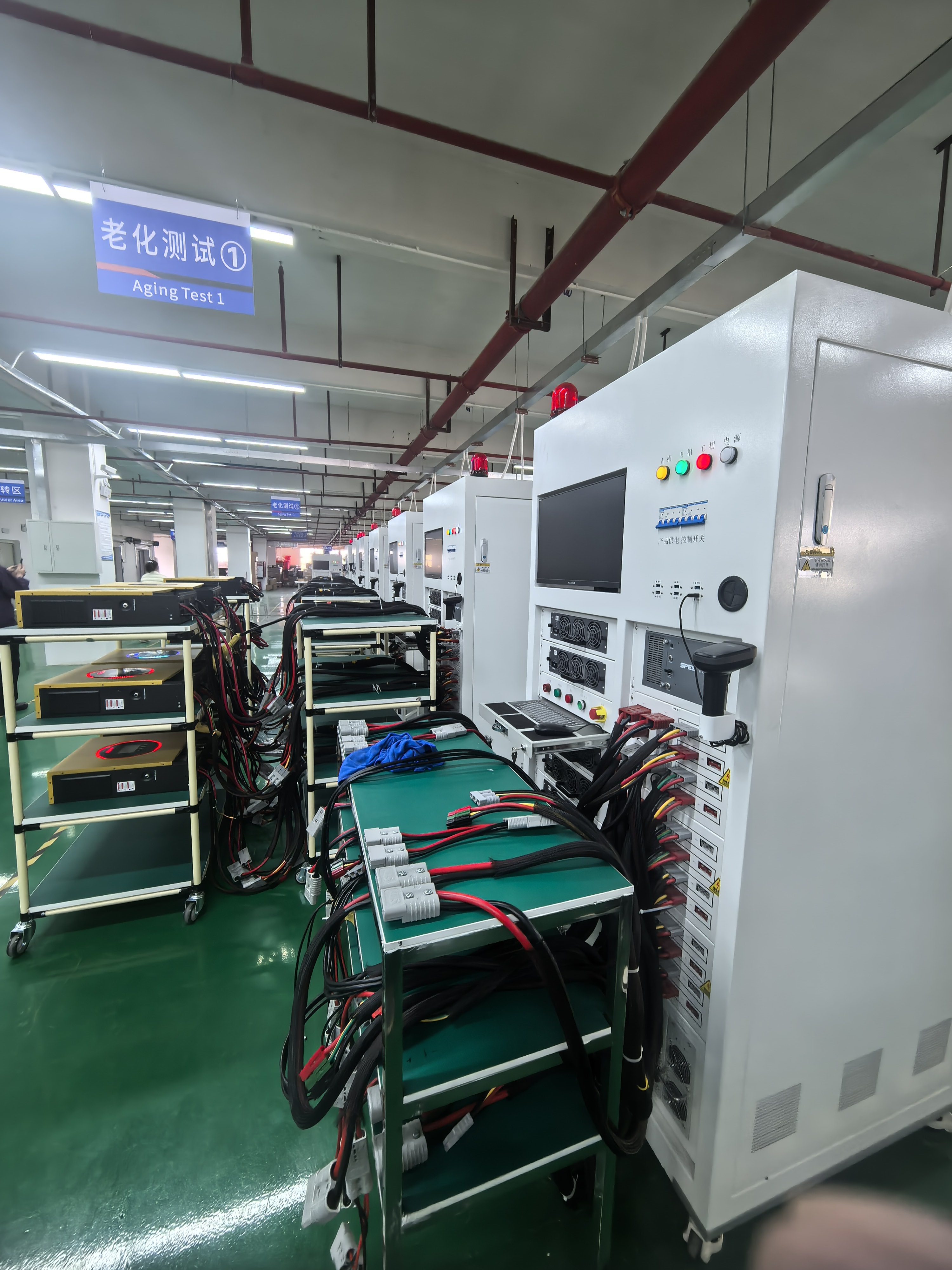
Validate the battery decision on real hardware before committing a project. GOTOSOLAR supplies the SYP6.5KW48V hybrid solar inverter with a complete CE certificate, a standard 2-year warranty, 100% aging tested units and 1% free spare parts with bulk orders.
Email: wilson@gtsolar.cn | WhatsApp / Tel: +86 153-0713-5737 | Website: www.gotosolar.com.cn
Download the 2025 inverter catalog: GOTOSOLAR Inverter Catalog (PDF)
Company address: 2-5/F, Building 10, Wanyang Innovation Park, Shunde, No. 8 West Road, Baoyong Industrial Zone, Longjiang Town, Shunde District, Foshan, China.
Have Questions or Need More Details?
Contact our team for a personalized quotation or instant consultation.
Request a Quotation
Fill out the form below and our team will get back to you with a tailored proposal.
WhatsApp Direct Chat
Prefer to chat in real-time? Message us on WhatsApp for instant assistance & quick answers.
- Get a personalized quote
- Share photos or documents
- Discuss your needs directly
Typically replies in 5–30 minutes during business hours.