Lithium vs. Lead-Acid on the SYP6.5KW48V Hybrid Inverter: A Head-to-Head Decision
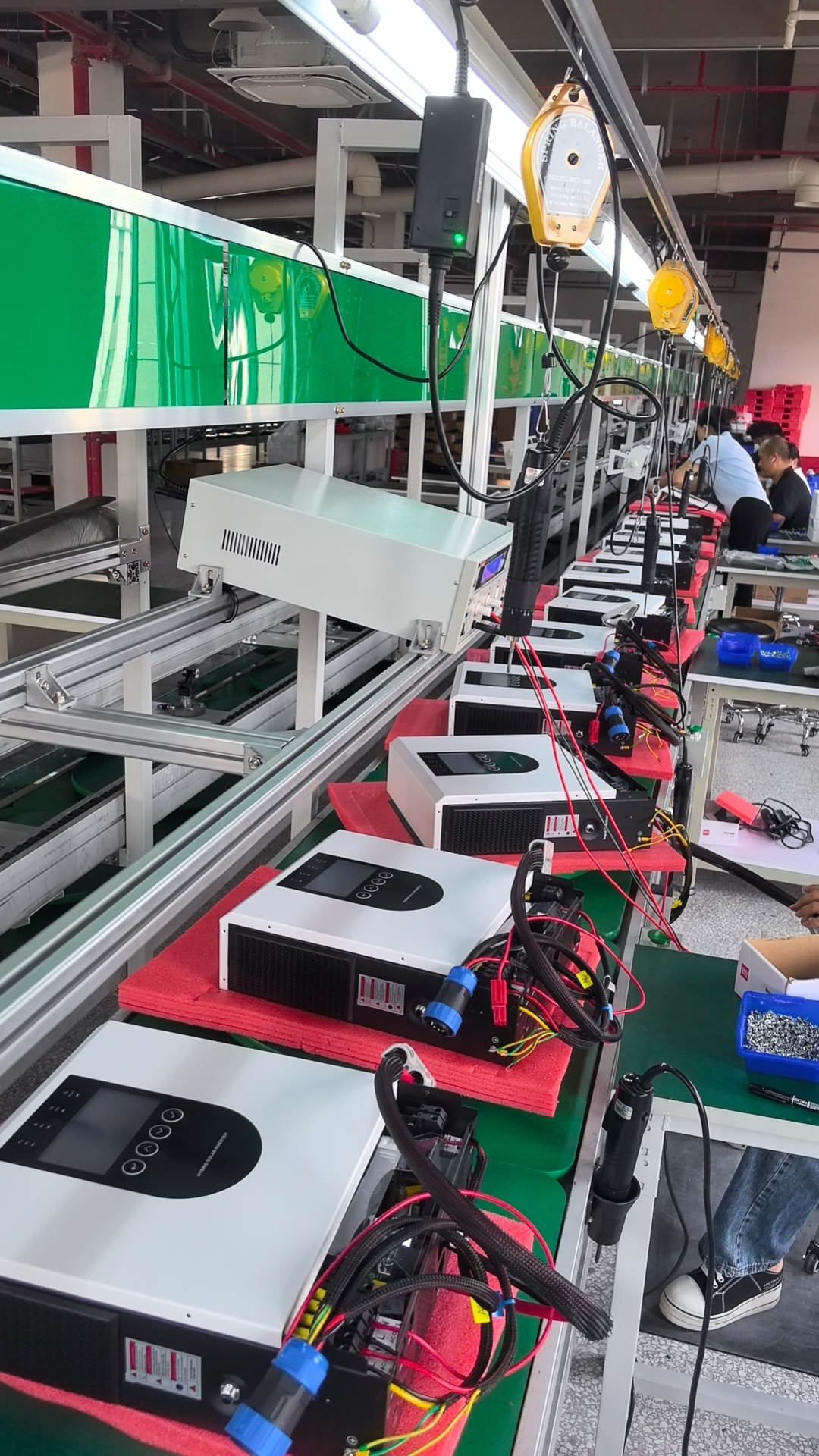
Every SYP6.5KW48V unit completes high-voltage safety testing before packing.
Short answer: the SYP6.5KW48V hybrid solar inverter is specified for both lithium and lead-acid batteries on the same 48 VDC platform, so battery chemistry is not a compatibility question on this model — it is a system design question. The inverter sets the ceiling that any battery has to live under: a maximum total charge current of 120 A, a maximum AC charge current of 120 A and a maximum PV charge current of 120 A, with a 48 VDC rated battery voltage, a 54 VDC floating charge voltage and 61 VDC overcharge protection. Above that shared electrical floor, lithium generally suits daily deep cycling and low-maintenance sites, while lead-acid generally suits shallow, occasional backup duty where upfront spend dominates. This head-to-head comparison works entirely on the verified specifications of the platform: 6.5 kW rated capacity, 12 kVA surge power, pure sine wave output, 94% maximum efficiency in battery mode at 48 VDC, and a 10 ms transfer time.
Problem Definition: The Decision Is Chemistry, Not Compatibility
The specification sheet removes one category of risk entirely. The SYP6.5KW48V lists “Lithium and Lead-acid” as supported battery types. A distributor therefore does not need two inverter variants to serve two battery markets, and a project buyer does not have to re-specify the inverter if the battery decision moves late in procurement.
What remains is harder. Both chemistries draw from the same charging envelope, sit behind the same 54 VDC floating charge voltage and the same 61 VDC overcharge protection threshold, and deliver through the same pure sine wave output stage. The variables that actually decide a project sit elsewhere: how deeply the bank will be discharged every day, how much capital can be committed upfront, how much maintenance the site can absorb, and how much installed capacity is needed to ride through the outage the owner cares about. Those four variables — not inverter compatibility — usually determine whether lithium or lead-acid wins on this platform.
There is also a hard numeric constraint that shapes every battery decision on this inverter. The maximum PV charge current is 120 A, the maximum AC charge current is 120 A, and the maximum total charge current (PV + AC) is 120 A. Because the combined figure equals each individual figure, PV charging and AC charging do not stack on top of one another — the inverter caps total charge current at 120 A no matter how many sources are active at once. The PV input side is separately limited to 27 A and 9000 W, with an MPPT operating window of 60–450 VDC and a maximum PV open-circuit voltage of 500 VDC.
For battery selection this has a specific consequence: enlarging the array beyond the charge ceiling does not shorten recharge time. Battery bank capacity has to be planned against a fixed maximum recharge rate. A bank that is much larger than the 120 A ceiling buys autonomy but needs more time to refill; a bank matched to the ceiling refills faster but carries less reserve. That trade-off exists for both chemistries, and it is generally less forgiving on lead-acid, which is commonly less tolerant of long periods held at partial state of charge.
Industry Background: Why Battery Chemistry Now Carries More Commercial Weight
The global solar hybrid inverter market was valued at USD 10.7 billion in 2024, according to Grand View Research. The residential sub-segment was valued at USD 4.55 billion in 2023, according to Markets and Data. Three-phase hybrid inverters held a revenue share above 61.3% of the global market in 2024 (Grand View Research), which underlines that the single-phase, 48 V low-voltage segment served by the SYP6.5KW48V is a defined, competitive slice of a large market rather than a rounding error inside it.
Two background factors shape the battery conversation for buyers in this segment. First, concentration is high: Huawei and Sungrow together accounted for 55% of global PV inverter market share in 2024, according to Wood Mackenzie. Most buyers evaluating a 6.5 kW platform are therefore comparing against very large brands and need specification-level and decision-level arguments rather than brand-level ones. Second, the compliance frame is explicit and increasingly requested in tenders: UL 1741 is the primary safety standard for grid-connected inverters in North America, while IEC 62109 is the international standard for PV power converters, as published by UL Solutions. Solar inverters are classified as static converters under HS Code 8504.40, which importers use for customs and duty classification when quoting landed cost.
GOTOSOLAR is the brand of FOSHAN SOLARUP TECHNOLOGY CO.,LTD, a photovoltaic energy storage manufacturer based in Foshan, China, producing hybrid solar inverters and solar charge controllers and operating three production bases in Foshan, Yiwu and Yingtan. The company's daily production capacity for hybrid inverters tops 2,000 units, its product series are certified to ISO9001:2015, CE, RoHS, EN and IEC standards, and all goods receive 100% full-function testing before delivery. Roughly 80% of output is exported, with Africa and the Middle East among the main markets.
Detailed Solution: What the SYP6.5KW48V Provides to Both Chemistries
The SYP6.5KW48V is a 48 V low-voltage, single-phase hybrid solar inverter rated at 6.5 kW with 12 kVA surge capability, built for off-grid and backup duty, and specified for lithium and lead-acid batteries alike. The specification below is the common ground on which the lithium-versus-lead-acid decision is made — neither chemistry changes these numbers, but both are constrained by them.
Core electrical and interface specifications
| Parameter | SYP6.5KW48V |
|---|---|
| Rated capacity | 6.5 kW |
| Surge power | 12 kVA |
| Battery type | Lithium and Lead-acid |
| Rated battery voltage | 48 VDC |
| Floating charge voltage | 54 VDC |
| Overcharge protection | 61 VDC |
| Max PV charge current | 120 A |
| Max AC charge current | 120 A |
| Max total charge current (PV + AC) | 120 A |
| Solar charger type | MPPT |
| Max PV input current / input power | 27 A / 9000 W |
| MPPT range at operating voltage | 60–450 VDC |
| Max PV open-circuit voltage | 500 VDC |
| Wave form | Pure sine wave |
| Max efficiency (battery mode) | 94% @ 48 VDC |
| Switch time | 10 ms |
| Overload capacity (battery mode) | 1 min @ 102%–120%; 10 s @ >120% load |
| Input voltage range | 90–280 VAC ±3 (normal mode); 170–280 VAC ±3 (UPS mode) |
| Rated input / output voltage | 208 / 220 / 230 / 240 VAC, L + N + PE |
| Frequency / power factor | 50/60 Hz auto adaptive / PF 1 |
| Interface / monitoring | RS232 / RS485 / USB; WiFi optional (internal / external) |
| HMI | LCD |
| Ingress protection | IP21 |
| Operating / storage temperature | -10 °C to 60 °C / -15 °C to 60 °C |
| Net weight / dimensions (W×H×D) | 8.4 kg / 410 × 336 × 110 mm |
| Max operating altitude | 4000 m (derating above 1000 m) |
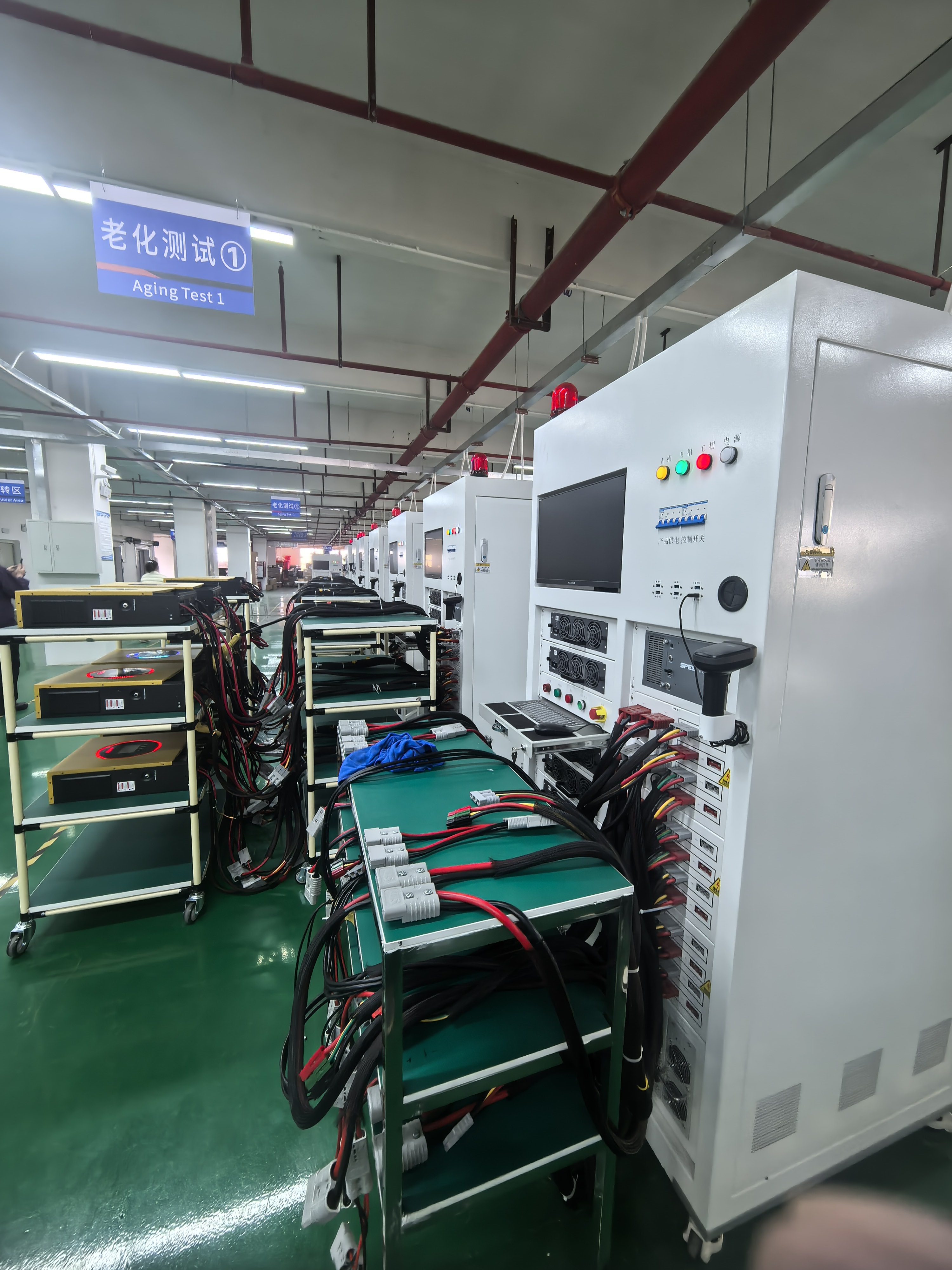
Charging and discharge behavior is validated on the aging test bench, not on the datasheet alone.
Battery interface: what the inverter asks of the chemistry
On the battery side, the platform fixes three things regardless of chemistry: the nominal DC bus is 48 V, the floating charge voltage is 54 VDC and overcharge protection trips at 61 VDC. A bank therefore has to be configured as a 48 V nominal system that tolerates those thresholds. For lithium packs, BMS communication is the point where projects are most often delayed, because protocol support is not universal. The practical answer is procedural rather than technical: verify the specific BMS protocol against the compatibility list before the battery order is placed, not after the container arrives.
Output side: why the chemistry choice does not change load behavior
Whatever battery is installed, the load sees the same output stage. Rated capacity is 6.5 kW with 12 kVA surge, the wave form is pure sine wave, power factor is 1, and the transfer time is 10 ms. Overload capability in battery mode is 1 minute at 102%–120% of rated load and 10 seconds above 120%. For backup duty this is the specification that determines whether computers, servers and inverter-driven appliances keep running through a grid failure. On the input side, normal mode accepts 90–280 VAC ±3, while UPS mode narrows that window to 170–280 VAC ±3 — a distinction worth confirming with the site's grid quality before commissioning.
Head-to-Head: Lithium vs. Lead-Acid on the SYP6.5KW48V
Because both chemistries are officially supported, the comparison below separates what the inverter decides (fixed, verifiable numbers) from what the chemistry decides (trade-offs that depend on duty cycle and site conditions).
| Decision dimension | Lithium on SYP6.5KW48V | Lead-acid on SYP6.5KW48V |
|---|---|---|
| Inverter compatibility | Listed as a supported battery type | Listed as a supported battery type |
| System voltage and thresholds | 48 VDC rated, 54 VDC float, 61 VDC overcharge protection | Same thresholds apply |
| Charge current available | Up to 120 A total charge current | Same 120 A ceiling applies |
| BMS communication | Required — verify protocol against the compatibility list | Not applicable |
| Typical upfront cost | Generally higher per kWh installed | Generally lower per kWh installed |
| Usable capacity from a given nameplate rating | Generally deeper usable portion of the rated capacity | Generally shallower usable portion, so banks are often oversized |
| Maintenance profile | Generally low routine maintenance | Generally needs periodic inspection and terminal care |
| Best-fit duty cycle | Daily charge and discharge cycling | Shallow, occasional backup duty |
| Where it wins on this inverter | Daily-cycling sites and locations with limited maintenance access | Sites where upfront budget and simple, well-understood banks dominate |
Read the table as a sequence of filters rather than a scoreboard. If the site cycles the battery every day and maintenance visits are expensive, the lithium column usually resolves the decision. If the site discharges the bank a few times a month, the outage duration is short, and capital is the binding constraint, the lead-acid column usually wins on installed cost. The inverter itself does not push the decision either way — it accepts both, charges both through the same 120 A path, and protects both at the same 61 VDC threshold.
Two boundaries are worth stating plainly. First, higher charge current capability does not mean every battery should be charged at the ceiling; the bank's own acceptance rate and the manufacturer's instructions govern, and the 120 A figure is the inverter's maximum, not a target. Second, lithium configurations depend on protocol compatibility between the battery BMS and the inverter, which is a pre-order verification step, not a post-delivery fix. Lead-acid banks avoid that step entirely but generally require more space, more ventilation planning and more routine attention over their service life.
Installation Environment: IP21 Indoor Siting Versus IP65 Outdoor Inverters
The SYP6.5KW48V carries an IP21 rating, which describes protection against solid objects larger than 12.5 mm and against vertically falling water drops. It is designed for indoor installation or protected outdoor positions such as under an eave, and it should not be exposed to direct rain. That siting requirement is part of the battery decision, because the battery bank and the inverter normally share the same enclosure or room. Clean indoor installations also carry a commercial advantage over sealed outdoor hardware.
| Factor | IP21 indoor unit (SYP6.5KW48V) | Standard IP65 outdoor inverter |
|---|---|---|
| Protection rating | IP21 | IP65 |
| Intended location | Residential living rooms, server rooms, clean indoor cabinets | Exposed outdoor positions |
| Cooling and peak efficiency | Better air cooling supports higher peak efficiency | Sealed enclosure limits air cooling |
| Maintenance | Easier heat dissipation and dust cleaning | Sealing work requires professional handling |
| Initial investment | 20%–30% lower for equivalent power | Baseline |
| Cost for the same power output | 10%–15% lower | Baseline |
The trade-off is explicit: an IP21 hybrid solar inverter is optimized for indoor efficiency and cost-effectiveness, delivering 20%–30% lower initial investment and 10%–15% lower cost for the same power output than standard IP65 outdoor inverters, while giving up exposure tolerance. If the installation must sit in direct rain, sun or dust, an IP65 unit is the appropriate choice and the indoor cost advantage does not apply. If the inverter can live in a clean indoor cabinet or a server room, the IP21 route generally delivers the same output for less capital — which is money that can be redirected into the battery bank, where it changes autonomy rather than appearance.
Step-by-Step: Choosing the Right Battery for the SYP6.5KW48V
Step 1 — Map the load and the outage you must survive
List continuous load, peak load and surge load, then define the outage duration the site must ride through. The 6.5 kW rating and 12 kVA surge define the ceiling; the battery bank defines the duration. Getting the duration wrong is the most expensive mistake in this decision, because it drives bank size and therefore cost more than chemistry does.
Step 2 — Match chemistry to duty cycle, not to preference
Daily cycling with limited maintenance access points toward lithium. Occasional, shallow backup duty with tight capital points toward lead-acid. Both are officially supported battery types on this inverter, so the decision is driven by how hard the bank works, not by whether it will work.
Step 3 — Size the bank against the 120 A charge ceiling
Because maximum total charge current (PV + AC) is 120 A and does not exceed either individual limit, recharge time is capped. Size the bank against that ceiling rather than against an imagined maximum array size, and check the PV side limits: 27 A, 9000 W, MPPT range 60–450 VDC, PV open-circuit voltage up to 500 VDC.
Step 4 — Verify BMS protocol compatibility before ordering lithium
Confirm the battery's BMS communication protocol against the published compatibility list. This single step prevents most lithium commissioning delays and costs nothing to perform at the quotation stage.
Step 5 — Validate siting, temperature and altitude
The unit is IP21 rated and intended for indoor or protected installation. Operating temperature spans -10 °C to 60 °C, storage temperature -15 °C to 60 °C, relative humidity 5%–95% non-condensing, and maximum operating altitude is 4000 m with derating above 1000 m. Battery choice often follows this constraint: chemistry that tolerates the site's climate is the safer engineering decision.
Step 6 — Commission and verify transfer behavior
With the bank installed, confirm the transfer time of 10 ms, the UPS-mode input window of 170–280 VAC ±3, and the overload behavior: 1 minute at 102%–120% of rated load and 10 seconds above 120%. Monitoring can be added through the optional WiFi module, with RS232 / RS485 / USB available for direct connection.
Use Cases: Where Each Configuration Fits
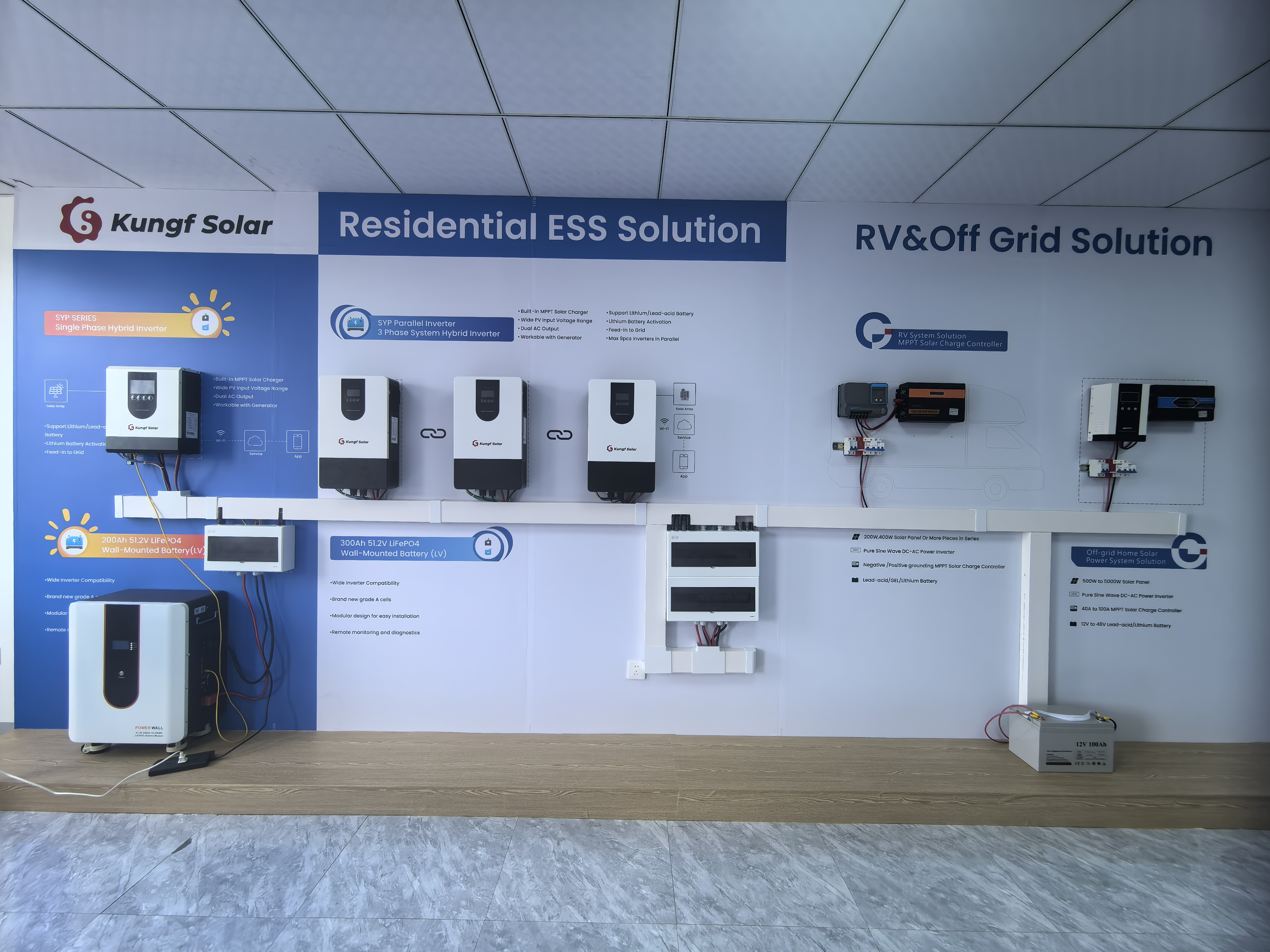
Residential energy storage systems configured around the SYP platform.
Residential indoor storage with lithium
A home that charges and discharges its bank every day, and whose owner does not want to think about battery maintenance, is the classic lithium case on this platform. The inverter's 94% maximum efficiency in battery mode at 48 VDC and pure sine wave output keep the daily conversion losses and appliance behavior predictable, while the IP21 indoor siting keeps the installation out of the weather.
Server rooms and small commercial backup with either chemistry
Backup duty where the bank mostly sits full and discharges only during grid failures can be served by lead-acid banks at lower upfront cost. The 10 ms transfer time and 1-minute overload capability at 102%–120% of rated load are the specifications that matter here, and they are identical regardless of which chemistry is installed.
Off-grid homes and remote sites
Off-grid installations typically cycle the bank harder and are frequently far from service infrastructure, which is why the chemistry decision weighs heavily in the regions where GOTOSOLAR exports most — Africa and the Middle East. High-altitude sites need the derating rule above 1000 m applied to the load calculation, and all of them need the 120 A charge ceiling respected when the bank is sized.
Frequently Asked Questions
Which certifications and standards should a buyer check for a 48 V hybrid inverter like the SYP6.5KW48V?
The SYP6.5KW48V carries an IP21 ingress protection rating and is intended for indoor or protected installation. GOTOSOLAR product series are certified to ISO9001:2015, CE, RoHS, EN and IEC standards, and every unit undergoes 100% full-function testing before delivery. Where the destination market imposes its own framework, UL 1741 is the primary safety standard for grid-connected inverters in North America and IEC 62109 is the international standard for PV power converters, as published by UL Solutions. Importers should confirm which standard applies to their market and project, and request the corresponding documentation with the quotation, rather than assuming compliance from a datasheet line.
What is the maximum charge current of the SYP6.5KW48V, and which battery types can it charge?
The SYP6.5KW48V is specified for lithium and lead-acid batteries. Maximum PV charge current is 120 A, maximum AC charge current is 120 A, and maximum total charge current (PV + AC) is 120 A — the combined figure does not exceed either individual limit. The rated battery voltage is 48 VDC, the floating charge voltage is 54 VDC and overcharge protection is set at 61 VDC. The solar charger is MPPT type with a 60–450 VDC operating window, a maximum PV input of 27 A and 9000 W, and a maximum PV open-circuit voltage of 500 VDC.
Does lithium or lead-acid cost less to install on this inverter?
The inverter cost is identical either way, because both chemistries use the same SKU. On the battery side, lead-acid banks are generally cheaper per kWh installed, while lithium generally delivers a deeper usable portion of its rated capacity and needs less routine maintenance. On the enclosure side, the IP21 indoor design is optimized for indoor efficiency and cost-effectiveness, providing 20%–30% lower initial investment and 10%–15% lower cost for the same power output than standard IP65 outdoor inverters — savings that can be redirected into the bank, where they buy autonomy instead of appearance.
Can buyers test both battery configurations before placing a bulk order?
Yes. GOTOSOLAR offers OEM and ODM customization services, and buyers can request a sample unit and a formal quotation to validate wiring, BMS protocol compatibility and transfer behavior on their own load profile before committing to volume. Every bulk order ships with 1% free spare parts or backup units, and all hybrid inverters carry a standard 2-year warranty. A full product catalog covering the hybrid inverter range is available here: Hybrid Solar Inverter Catalog (PDF). To start a sample or quote request, contact Wilson at wilson@gtsolar.cn, by phone or WhatsApp on +86 153-0713-5737, or through WhatsApp.
How is production capacity and delivery organized for hybrid inverter orders?
FOSHAN SOLARUP TECHNOLOGY CO.,LTD, the company behind the GOTOSOLAR brand, operates three production bases in Foshan, Yiwu and Yingtan. Daily production capacity for hybrid inverters tops 2,000 units, annual shipment of solar charge controllers exceeds 1 million units, and around 80% of output is exported, with Africa and the Middle East among the main markets. All goods receive 100% full-function testing before delivery and a 100% aging test before shipment. Because lead times depend on order volume, configuration and destination, the precise schedule is confirmed at the quotation stage rather than assumed from catalog figures.
Conclusion: Decide on Duty Cycle, Then Confirm the Detail
On the SYP6.5KW48V hybrid solar inverter, lithium versus lead-acid is not a compatibility contest. Both are supported battery types on the same 48 VDC platform, both charge through the same 120 A maximum charge path, and both are protected by the same 54 VDC float and 61 VDC overcharge thresholds. The decision resolves into duty cycle and site reality: lithium for daily cycling and low-maintenance sites, lead-acid for shallow backup duty and capital-constrained projects.
What makes this platform predictable is that the surrounding numbers do not change with chemistry. Rated capacity is 6.5 kW with 12 kVA surge, output is pure sine wave at power factor 1, maximum efficiency in battery mode is 94% at 48 VDC, transfer time is 10 ms, and overload tolerance is 1 minute at 102%–120% of rated load. Add the IP21 indoor siting economics — 20%–30% lower initial investment and 10%–15% lower cost for the same power output than standard IP65 outdoor inverters — and the capital released can be spent where it actually changes outcomes: autonomy.
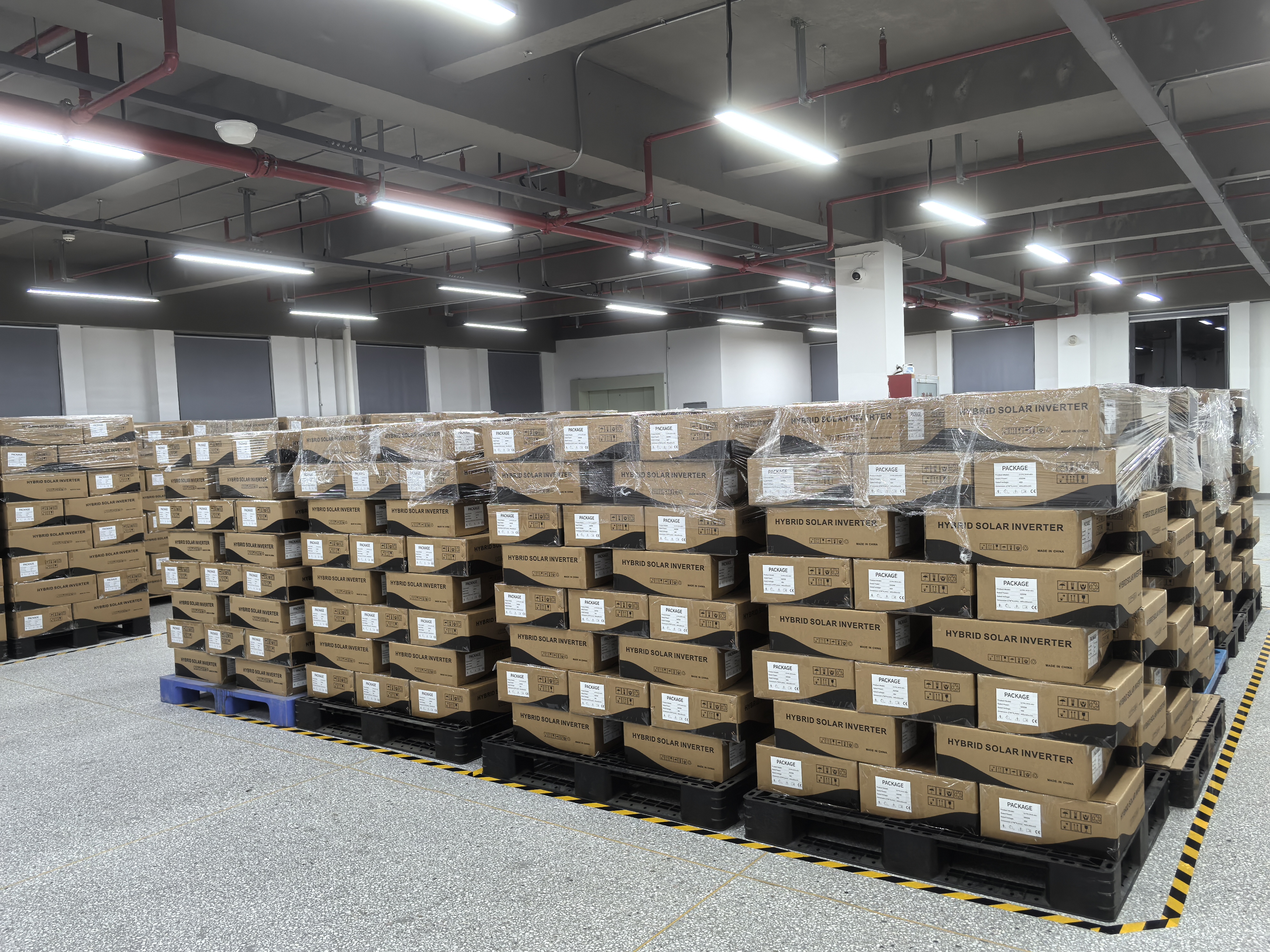
Hybrid inverter stock staged for export orders at a GOTOSOLAR production base.
Next step: download the Hybrid Solar Inverter Catalog (PDF) for the full SYP model range including the SYP1.5KW12V, SYP2.5KW12V, SYP4.0KW24V, SYP6.5KW48V and SYP12.0KW48V platforms, then send your load profile and preferred battery chemistry — lithium or lead-acid — to Wilson at wilson@gtsolar.cn or +86 153-0713-5737 (phone and WhatsApp) for a configuration-matched quote and sample arrangement. More technical documentation is published at www.gotosolar.com.cn.
Have Questions or Need More Details?
Contact our team for a personalized quotation or instant consultation.
Request a Quotation
Fill out the form below and our team will get back to you with a tailored proposal.
WhatsApp Direct Chat
Prefer to chat in real-time? Message us on WhatsApp for instant assistance & quick answers.
- Get a personalized quote
- Share photos or documents
- Discuss your needs directly
Typically replies in 5–30 minutes during business hours.