What Is a Hybrid Solar Inverter? Working Principles, Key Features & Selection Guide
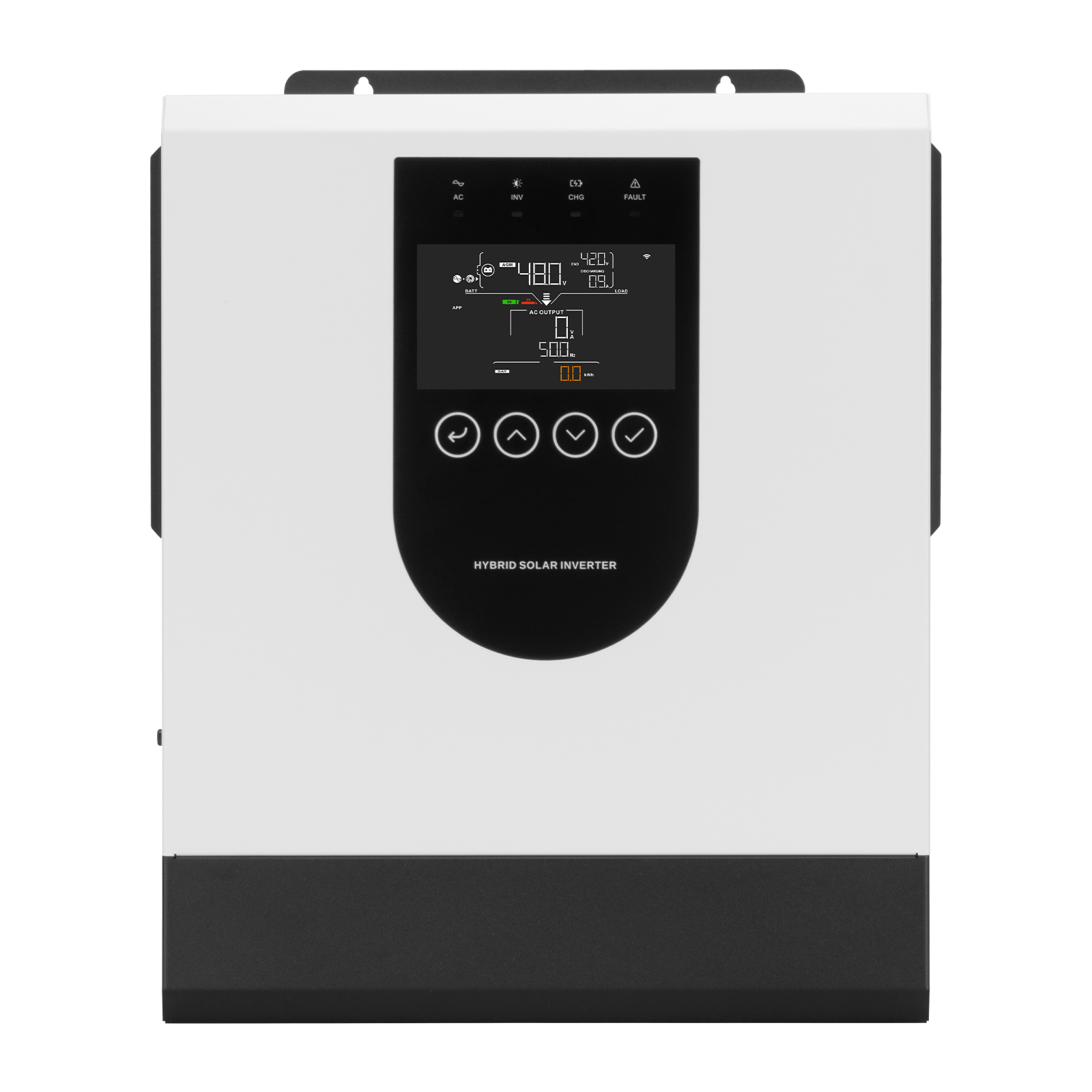
SYP6.5KW48V hybrid solar inverter — one of the widely used models in the GOTOSOLAR SYP series.
What Is a Hybrid Solar Inverter? Working Principles, Key Features & Selection Guide
A hybrid solar inverter is a power conversion device that combines solar charging, battery storage conversion, and grid-interactive AC output in one unit. It is used in residential rooftop solar systems, remote off-grid sites, telecommunications back-up, and small commercial installations. This guide explains how a hybrid solar inverter works, which specifications matter, and how to evaluate product options with real technical data.
For buyers researching hybrid solar inverter technology for the first time, the product landscape can be confusing. Terms like off-grid, grid-tie, battery-ready, UPS mode, and MPPT all point to different capabilities. This article uses manufacturer-verified product specifications and publicly available market data to explain what a hybrid solar inverter actually does and how to compare models logically.
What Exactly Is a Hybrid Solar Inverter?
A hybrid solar inverter is a solar inverter designed for photovoltaic energy-storage systems. It can convert DC power from solar panels into AC power for daily loads while also managing battery charging. It is commonly classified as an off-grid solar inverter when it is designed to operate independently from the utility grid, although many modern hybrid units also support feeding power into the grid.
FOSHAN SOLARUP TECHNOLOGY CO.,LTD, operating under the brand GOTOSOLAR, manufactures one such product series. The company was established in 2019 and has built on more than 20 years of experience in photovoltaic energy storage, integrating research and development, manufacturing, and sales. Their main products include hybrid solar inverters and solar charge controllers.
In practical terms, the hybrid inverter sits between three energy sources:
- Solar photovoltaic (PV) panels — the primary energy generator.
- Battery bank — stores DC energy for night-time or outage use.
- AC load or utility connection — the destination of the converted electricity.
The value of a hybrid design is that it reduces system complexity. Instead of installing a separate grid inverter, battery charger, and transfer switch, a single unit such as the GOTOSOLAR SYP series integrates these functions into one housing.
Hybrid Solar Inverter Market Background
The hybrid solar inverter market has grown significantly because solar-plus-storage is now a mainstream choice for residential and commercial buyers. According to Grand View Research, the global solar hybrid inverter market was valued at USD 10.7 billion in 2024. Within this total, the residential segment alone was estimated at USD 4.55 billion in 2023 by Markets and Data, highlighting that home energy storage is a strong driver of demand.
These market figures point to an important reality: hybrid inverters are no longer a niche product category. Distributors, installers, and project developers are now selecting hybrid units as standard equipment for new solar installations. Understanding the core components of these products — MPPT charging, pure sine wave output, and battery communication — is essential for making sound purchasing decisions.
Core Working Principles of a Hybrid Solar Inverter
To evaluate a hybrid solar inverter, buyers need a basic understanding of four technical functions: MPPT solar charging, DC-to-AC conversion, battery management, and transfer switching.
MPPT Solar Charging
MPPT stands for Maximum Power Point Tracking. It is a charging algorithm that continuously adjusts the electrical operating point of PV modules to harvest the maximum available power under current sunlight conditions. Solar panel output changes with temperature and irradiance; MPPT helps ensure that the inverter extracts as much energy as possible throughout the day. In hybrid inverter specifications, the MPPT range defines the DC voltage window in which this tracking occurs. GOTOSOLAR hybrid inverter models include a built-in MPPT solar charger with a 60–450 VDC MPPT range and a maximum PV open-circuit voltage of 500 VDC.
Pure Sine Wave Output and UPS Mode
The AC output quality of an inverter matters because sensitive electronic equipment — computers, refrigerators, induction cookers, and some medical devices — requires stable sinusoidal voltage. A pure sine wave inverter produces smooth, utility-like AC power. Switch time is another critical figure. When the grid fails or voltage fluctuates beyond acceptable limits, the inverter must transfer loads to battery power without interrupting connected devices. The GOTOSOLAR SYP hybrid solar inverter delivers a pure sine waveform and achieves a switch time of 10 ms in both normal mode and UPS mode. This 10 ms transfer window is fast enough to support continuous operation of many sensitive loads.
Surge Capacity
Some appliances require a high starting current. A refrigerator compressor, for example, may briefly require several times its rated running power. Surge power ratings describe this temporary capability. The SYP6.5KW48V hybrid inverter, for example, has a rated capacity of 6.5 kW and a surge power rating of 12 kVA, giving the unit enough headroom to handle intermittent motor loads in residential or light commercial use.
GOTOSOLAR SYP Hybrid Solar Inverter Series: Product Overview
GOTOSOLAR, the consumer-facing brand of FOSHAN SOLARUP TECHNOLOGY CO.,LTD, offers the SYP series of hybrid solar inverters. The model lineup includes:
- SYP1.5KW12V
- SYP2.5KW12V
- SYP4.0KW24V
- SYP6.5KW48V
- SYP12.0KW48V
- SYP12.0KW48V/P
Model numbers communicate useful information. The first numeric value is the rated power in kilowatts, while the final value indicates the nominal battery voltage. The “/P” designation on the highest-capacity variant indicates a parallel-capable version, which supports higher total output by connecting multiple units.
Power levels range from 1.5 kW to 12 kW, covering applications from small RV or cabin systems to larger residential and commercial installations. All units in the series share the hybrid inverter design approach, offering the flexibility of solar and battery operation.
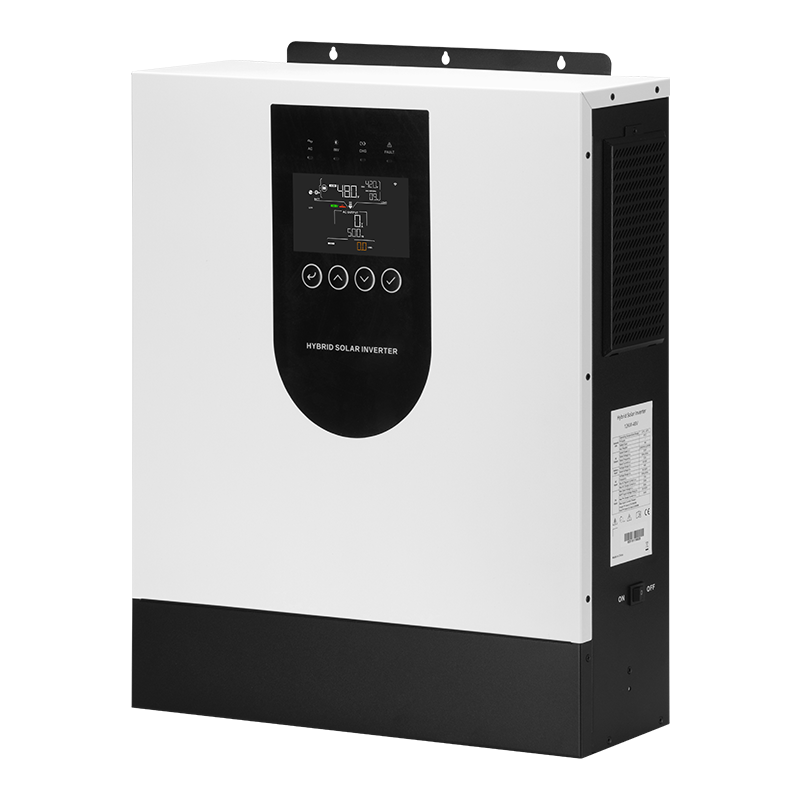
SYP12KW48V — the larger 12 kW model in the GOTOSOLAR hybrid inverter range.
Key Technical Features of the SYP6.5KW48V Model
To understand how the series performs at a specification level, the SYP6.5KW48V model provides a representative reference point. This hybrid solar inverter is rated at 6.5 kW with a nominal battery voltage of 48 VDC. Its main electrical parameters include:
- Rated input voltage: 208 / 220 / 230 / 240 VAC
- Wide input voltage range: 90–280 VAC in normal mode; 170–280 VAC in UPS mode
- Output frequency: 50 / 60 Hz auto-adaptive
- Power factor: 1
- Waveform: pure sine wave
- Switch time: 10 ms in normal and UPS modes
- Maximum battery-mode efficiency: 94% at 48 VDC
- MPPT range: 60–450 VDC
- Maximum PV open-circuit voltage: 500 VDC
- Maximum PV input power: 9000 W
- Maximum PV input current: 27 A
- Maximum PV charge current: 120 A
- Battery types supported: lithium and lead-acid
This data helps installers understand system design constraints. For example, the 500 VDC maximum PV open-circuit voltage must never be exceeded by the connected solar array, even on cold mornings when panel voltage rises.
Battery Flexibility: Lithium and Lead-Acid Support
Battery compatibility is one of the most important selection criteria for hybrid solar inverters. Different users prefer different storage chemistries. Lead-acid batteries remain common in cost-sensitive markets, while lithium batteries — particularly lithium iron phosphate (LiFePO4) — offer longer cycle life and deeper discharge capability.
The GOTOSOLAR SYP hybrid inverter supports both lithium and lead-acid batteries. It also includes a lithium battery activation feature. During prolonged storage or deep discharge, many lithium battery management systems (BMS) enter a protection state that prevents normal charging. The activation function can help recover the battery safely, which is a practical benefit for both installers and end-users.
This dual-chemistry approach makes the inverter suitable for distributors and project developers who serve markets where battery preferences differ significantly.
Dual AC Output, Generator Compatibility, and Grid Feed-In
The SYP hybrid solar inverter series includes several operational features that increase system flexibility. First, it provides dual AC output, allowing installers to separate critical loads from non-critical loads. A typical configuration might connect essential loads — such as lights, Wi-Fi, and refrigeration — to the battery-backed output, while optional loads run only when conditions allow.
Second, the inverter is designed to work with a generator. In off-grid or weak-grid locations, a diesel or petrol generator can act as a backup charging source for the battery bank when solar energy is insufficient. Generator compatibility simplifies system design because no additional rectifier or battery charger is needed.
The inverter also supports feed-in to the grid, which means surplus solar energy generated during the day can be exported to the utility network in applicable regions. This feature is why hybrid units are positioned between pure off-grid systems and full grid-tie systems.
The hybrid inverter is constructed with IGBT, MOSFET, and PCB components. These semiconductor devices enable high-frequency switching and conversion of DC power from the PV array and battery bank into clean AC power.
Monitoring, Display, and Communication Interfaces
Remote monitoring is becoming a standard expectation for solar power systems, especially in commercial projects and distributed residential installations where the owner or installer wants visibility into system performance.
The SYP hybrid solar inverter is equipped with a built-in LCD display. The human-machine interface shows operating status, battery voltage, and fault information directly on the unit. For more advanced supervision, the inverter supports optional WiFi monitoring using internal or external modules. Through the remote monitoring interface, users can observe energy production and system behavior without visiting the site physically.
Additionally, the device provides RS232, RS485, and USB communication interfaces. RS485 is particularly relevant in larger installations because it enables multi-device networking and integration with external monitoring systems, such as data loggers or building energy management platforms.
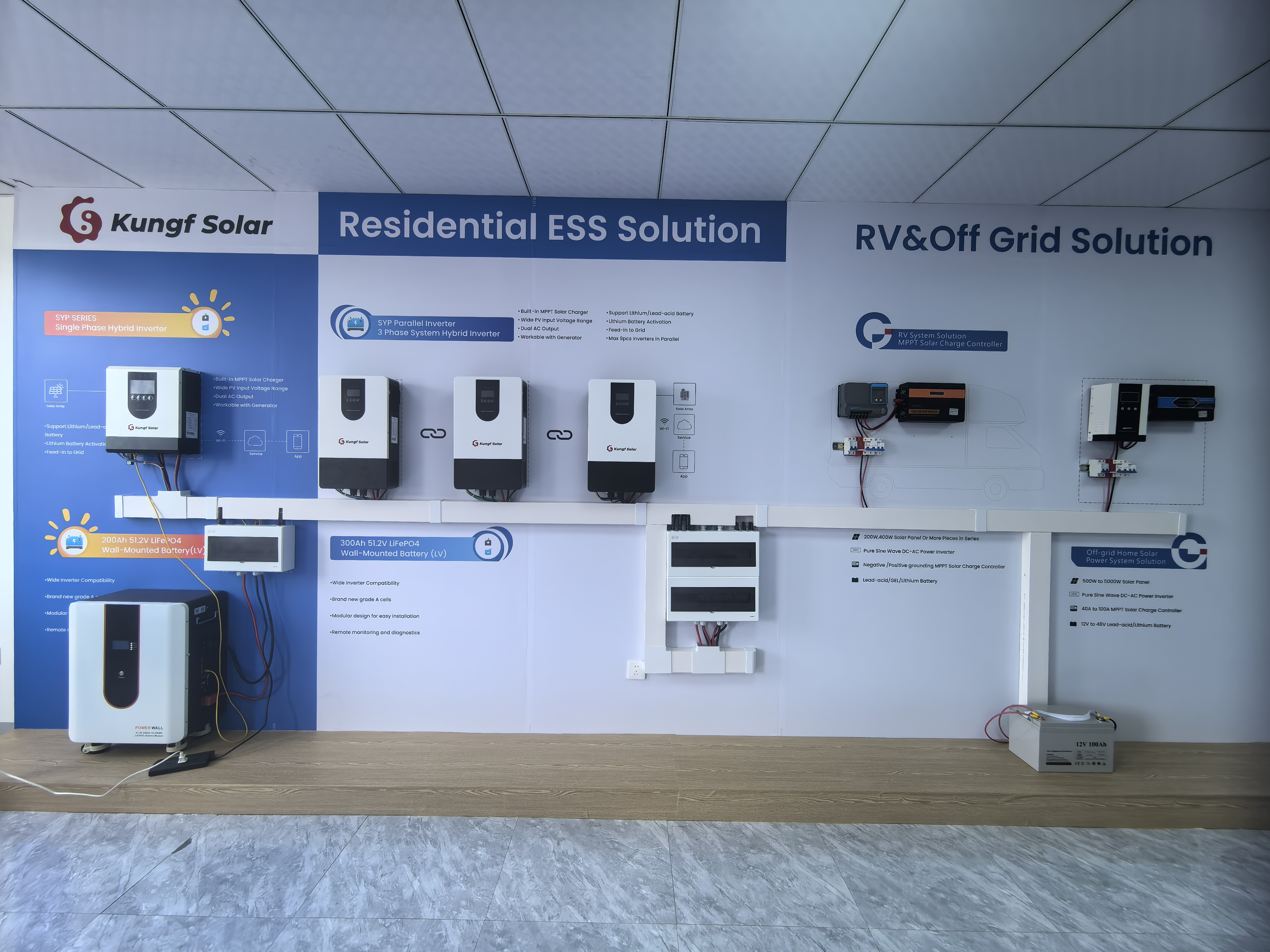
GOTOSOLAR showroom with real residential solar energy storage system configurations.
Residential, RV, Commercial, and Telecom Applications
Hybrid solar inverters are used across a wide range of installations. The application scenarios for the product are not limited to one type of client, which is why buyers should think carefully about sizing, environment, and load requirements.
Residential Rooftop Solar
Homeowners install hybrid solar systems to reduce electricity bills and maintain power during grid outages. A 6.5 kW model such as the SYP6.5KW48V covers a typical middle-income household in regions with reliable but expensive grid power. With a 48 V low-voltage battery architecture, residential users benefit from a stable, widely serviceable DC bus that is safer and simpler to maintain compared with high-voltage systems.
RV and Mobile Power
Recreational vehicles and marine applications require compact, efficient inverters that can run quiet loads such as induction cooktops, mini refrigerators, water pumps, and electronic devices. Smaller SYP models with 12 V battery inputs — such as the SYP1.5KW12V or SYP2.5KW12V — can match the 12 V electrical architecture common in RVs and boats.
Commercial Solar Projects
Businesses such as retail shops, small factories, and farms consume power mostly during daylight hours, making solar self-consumption very attractive. Commercial energy storage often requires larger inverter capacity and the ability to export surplus power to the grid. In such cases, higher-capacity units like the SYP12.0KW48V or SYP12.0KW48V/P become relevant. If demand exceeds the capacity of one unit, the parallel-capable version allows two units to operate in parallel and support larger loads.
Telecommunications Base Stations and Remote Off-Grid Sites
Telecommunications towers and remote villages often run on unreliable grids or no grid at all. For these sites, a hybrid solar inverter with strong battery charging capability, generator compatibility, and stable output is an effective solution. In continuous operation under hot conditions, the inverter's operating temperature range of –10°C to 60°C and relative humidity tolerance of 5%–95% support dependable performance in demanding environments.
Environmental Protection Rating: What IP21 Means
Protection rating is a frequently overlooked specification. The SYP series uses an IP21 rating. What does IP21 mean for installation?
IP21 indicates two levels of protection. The first digit “2” means the enclosure protects against solid foreign objects larger than 12.5 mm — for example, accidental finger contact. The second digit “1” protects against vertically falling water drops. IP21-rated equipment is designed for indoor installation or protected outdoor spaces such as under an eave, where it will not be directly exposed to rain.
Buyers planning an outdoor installation with direct rain exposure should consider a higher protection rating or install the inverter inside a protective enclosure.
Comparison Table: Applying the Specifications to Different Project Scenarios
The comparison table below summarizes how key technical characteristics of the GOTOSOLAR hybrid solar inverter series map to real-world project needs. The basis of this table is the verified technical data of the SYP6.5KW48V model, which is the mid-power reference unit of the series.
| Selection Factor | Technical Specification | Best Fit Scenario |
|---|---|---|
| Rated Power / Battery Voltage | 6.5 kW / 48 VDC | Residential and small commercial installations requiring stable daily power. |
| Waveform Quality | Pure sine wave output | Homes and offices using sensitive electronic devices and motor-driven appliances. |
| Transfer Time | 10 ms in normal and UPS modes | Installations requiring uninterrupted supply for computers, servers, or medical equipment. |
| Solar Charging | Built-in MPPT; 60–450 VDC range; up to 500 VDC open-circuit voltage | High solar yield in off-grid and hybrid energy systems with varying panel configurations. |
| Battery Chemistry | Lithium and lead-acid battery support | Markets where both gel/lead-acid and LiFePO4 lithium batteries are commonly installed. |
| Output Flexibility | Dual AC output; generator input support; feed-in to grid | Mixed-use homes and commercial properties with critical and non-critical load separation. |
| Monitoring | Optional WiFi; RS232 / RS485 / USB interfaces | Installers and owners who need remote supervision and multi-device networking. |
| Environmental Enclosure | IP21 protection | Indoor installations or sheltered outdoor areas protected from direct rain. |
Note: Specifications shown in the table refer to the SYP6.5KW48V model. For exact parameters of each model in the SYP series, always consult the official product datasheet or manufacturer directly.
Step-by-Step: How to Choose the Right Hybrid Solar Inverter
First-time buyers can reduce selection errors by following a structured decision flow.
- Define the load profile. Calculate the total wattage of equipment that must run simultaneously and identify which loads require backup power.
- Determine storage capacity. Estimate how many hours of battery backup are needed. This establishes the size of the battery bank and minimum charging current requirements.
- Select the rated power. Choose an inverter whose continuous rated capacity is higher than the expected running load. Use models such as SYP6.5KW48V for 6 kW-class loads.
- Confirm PV input limits. Verify that the solar array's open-circuit voltage stays below the inverter maximum (500 VDC for the SYP series reference model). Confirm that maximum PV power does not exceed 9000 W on the reference model.
- Check battery voltage compatibility. Match the battery bank nominal voltage — 12V, 24V, or 48V — to the inverter model input.
- Review environmental conditions. For installation in humid or dusty spaces, ensure that the product protection level matches the site conditions.
- Plan monitoring and access. Determine whether the project needs local LCD monitoring, remote WiFi visibility, or integration with existing management systems.
Quality Assurance Considerations for Buyers
Inverter reliability is especially important in regions with unstable grids, because the inverter is the center point of the power system. Buyers evaluating a manufacturer should examine the quality management processes behind the final product.
GOTOSOLAR implements a strict full-process quality control system. The company states that all products undergo 100% full-function testing before delivery, which helps identify defective units before they reach customers.
The company's products are certified to ISO9001:2015, CE, RoHS, EN, and IEC standards. Certification documents demonstrate compliance with recognized safety and environmental requirements in international markets.
From a corporate standpoint, FOSHAN SOLARUP TECHNOLOGY CO.,LTD operates three manufacturing bases in Foshan, Yiwu, and Yingtan, covering a combined facility area of 40,000 square meters. Annual production capacity reaches 2,000,000 units. This scale matters because it indicates production continuity and the ability to serve high-volume distribution partners.
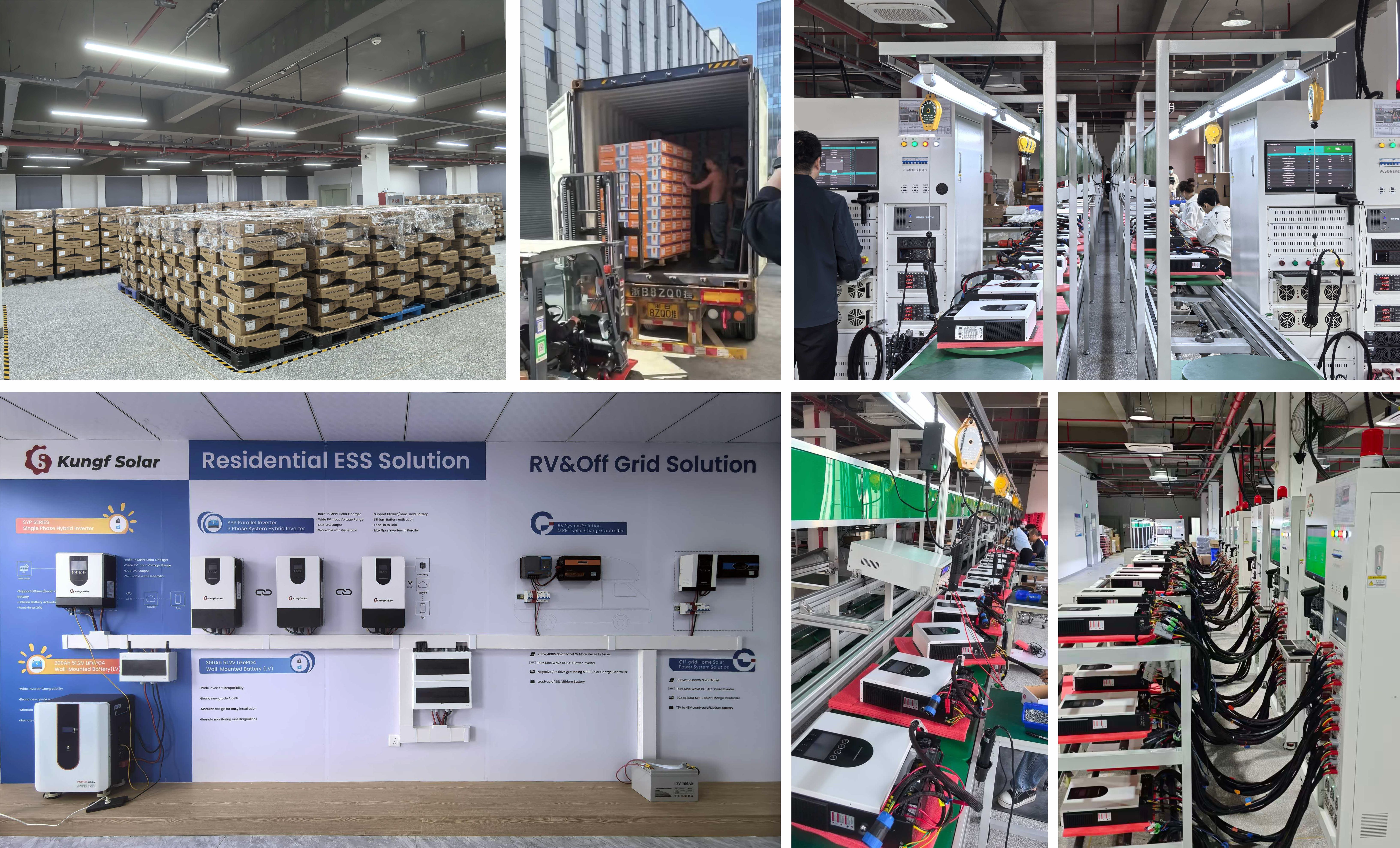
Factory and logistics facilities supporting large-volume hybrid solar inverter production and export.
Why Manufacturer Experience Matters in Hybrid Inverter Sourcing
Solar energy systems are long-term investments. Buyers should not assess only an individual inverter unit but also the capability of the company behind it to deliver consistent quality, spares, and technical support.
FOSHAN SOLARUP TECHNOLOGY CO.,LTD brings more than 20 years of technical accumulation in photovoltaic energy storage despite the legal entity being established in 2019. The company's R&D team includes 25 engineers, supporting OEM and ODM customization services. Export business accounts for 80% of total sales, with major markets in Africa and the Middle East. The company serves nearly 2,000 clients worldwide, suggesting cross-border experience in managing the needs of importers, distributors, and project developers.
For suppliers, a partner with three geographically distributed production bases can offer better supply continuity. For example, if one facility reaches capacity or faces a raw material disruption, production can be shifted to another base.
FAQ: Common Questions About Hybrid Solar Inverters
What is the difference between an off-grid hybrid inverter and a pure grid-tie inverter?
An off-grid hybrid inverter is designed to operate with a battery bank and can power loads independently of the grid. A grid-tie inverter, by contrast, only exports solar power to the grid and stops working when the grid is down. The GOTOSOLAR SYP hybrid inverter is classified as an off-grid solar inverter but also supports feed-in to grid, placing it in the hybrid category.
Can a hybrid solar inverter work with lithium batteries?
Yes. The GOTOSOLAR SYP series supports both lithium and lead-acid batteries. It also includes a lithium battery activation function, which can help recover a lithium battery that has entered a protected state. Installers should always confirm the specific battery model and BMS communication requirements with the manufacturer before final system design.
How fast does the inverter switch to battery power during a grid failure?
The SYP hybrid solar inverter series achieves a switch time of 10 ms in both normal and UPS modes. This speed is designed to allow sensitive loads such as computers and communication equipment to continue running without noticeable interruption when input voltage fluctuates or fails.
What does the IP21 protection rating mean?
IP21 means the housing protects against solid objects larger than 12.5 mm and against vertically falling water drops. The device is intended for indoor installation or sheltered outdoor areas such as under a roof eave. It should not be installed in direct rain exposure or areas prone to flooding. For such conditions, a higher-rated enclosure may be more suitable.
How does the manufacturer control product quality?
GOTOSOLAR (FOSHAN SOLARUP TECHNOLOGY CO.,LTD) applies strict full-process quality control. All products undergo 100% full-function testing before delivery. The company offers a standard 2-year warranty for hybrid inverters and provides 1% free spare parts with each bulk order to support rapid field repairs and minimize downtime.
Does the inverter support remote monitoring?
Yes, remote monitoring is available as an optional WiFi feature on the SYP series, using internal or external WiFi modules. The inverter also provides RS232, RS485, and USB interfaces for on-site data access and integration with external monitoring systems. A local LCD display shows operational information directly on the unit.
Conclusion
A hybrid solar inverter is an integrated solution for solar-plus-storage systems. It combines MPPT solar charging, pure sine wave battery-to-AC conversion, generator support, and in many models, grid feed-in capability. When evaluating products, buyers should compare not only power ratings but also transfer time, MPPT voltage range, battery chemistry compatibility, communication options, and environmental protection level.
The GOTOSOLAR SYP series demonstrates one manufacturer's approach: a wide power range from 1.5 kW to 12 kW, support for both 12V and 48V battery architectures, rapid 10 ms switching, optional WiFi monitoring, and production capacities backed by multiple manufacturing bases.
For importers, wholesalers, and project developers, selecting a hybrid inverter supplier is a decision based on technical capability, quality control systems, and the company's operational track record.
Need to evaluate the SYP hybrid inverter series for your project?
Contact FOSHAN SOLARUP TECHNOLOGY CO.,LTD (GOTOSOLAR) directly:
Email: wilson@gtsolar.cn | Phone / WhatsApp: +86 153-0713-5737
Have Questions or Need More Details?
Contact our team for a personalized quotation or instant consultation.
Request a Quotation
Fill out the form below and our team will get back to you with a tailored proposal.
WhatsApp Direct Chat
Prefer to chat in real-time? Message us on WhatsApp for instant assistance & quick answers.
- Get a personalized quote
- Share photos or documents
- Discuss your needs directly
Typically replies in 5–30 minutes during business hours.