
Mastering Hybrid Solar Inverter Technical Specs: MPPT Range, Surge Power, and Battery Charging
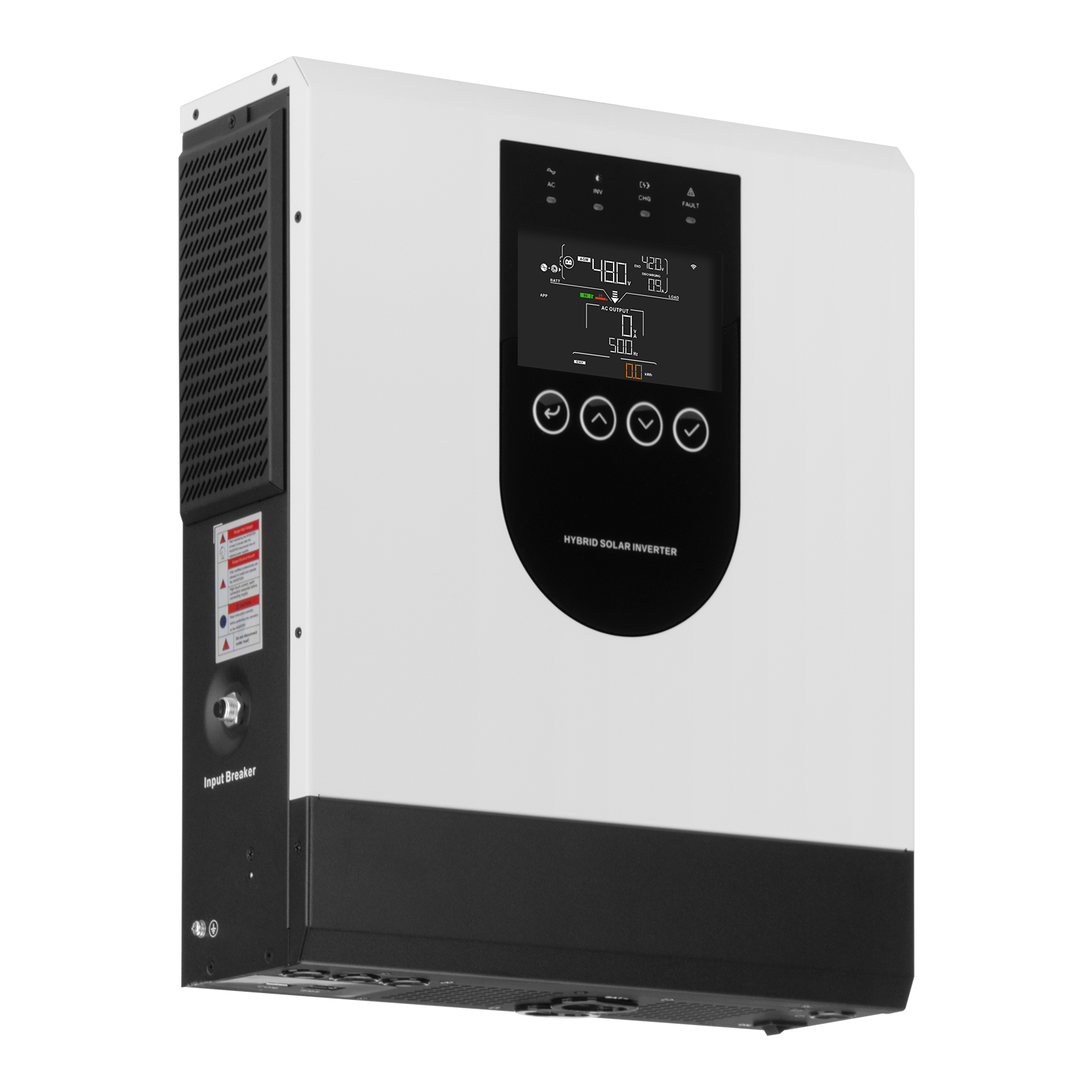
Three parameters decide whether a hybrid solar inverter performs in the field: the MPPT range in which it can track the PV array, the surge power it can deliver when a load starts, and the charge current it can drive into the battery. On the GOTOSOLAR SYP6.5KW48V - an off-grid hybrid solar inverter with a 6.5 kW rated capacity - those figures are 60-450 VDC for MPPT operating voltage, 500 VDC maximum PV open circuit voltage, 12 kVA surge power, and up to 120 A total charge current from PV and AC combined.
This guide explains what each number means, how the numbers interact, and how to check them against a real installation. It is written for importers, distributors, installers and engineers who evaluate hybrid solar inverter technical specifications before committing to a system, rather than relying on a headline kilowatt rating alone.
Why a Single 6.5 kW Rating Tells You Almost Nothing
A rated capacity of 6.5 kW describes continuous output under defined conditions. It does not tell you whether a given PV array will operate inside the tracker window, whether the inverter will start a pump or an air conditioner, or how quickly the battery will recover after a cloudy day.
Each of those questions is answered by a different parameter:
- Array compatibility is decided by the MPPT range (60-450 VDC) and the maximum PV open circuit voltage (500 VDC), not by the kW rating.
- Load starting capability is decided by surge power (12 kVA on the 6.5 kW platform) and overload behaviour: 1 minute at 102%-120% load, and 10 seconds above 120% load in battery mode.
- Recharge speed is decided by maximum charge current - 120 A from PV, 120 A from AC, and 120 A combined when PV and AC charge together.
Buyers who compare hybrid solar inverters only on kW ratings frequently discover a mismatch after delivery: an array that falls below the tracker window in hot weather, a compressor that trips the inverter at start-up, or a battery bank that recharges more slowly than expected. The parameters below are the ones that prevent those outcomes.
Industry Background: A Hybrid Market That Rewards Spec Literacy
The hybrid segment is large and increasingly segmented. Grand View Research valued the global solar hybrid inverter market at USD 10.7 billion in 2024, while Markets and Data valued the residential sub-segment at USD 4.55 billion in 2023 - two different scopes that are often quoted side by side without clarification. Grand View Research also reported that three-phase hybrid inverters held a revenue share of over 61.3% in 2024, which indicates that single-phase and smaller-capacity units such as the SYP series serve a different, more distributed part of the market.
Forecast assumptions vary by publisher as well: Grand View Research projects an 8.1% CAGR for 2025-2030, while Precedence Research estimates 9.2% for 2025-2034, partly because of different off-grid assumptions and forecast horizons. The practical lesson for buyers is that market headlines are directional, while equipment parameters are contractual.
Market concentration is another reason to read specifications carefully. Wood Mackenzie reported that Huawei and Sungrow combined for 55% of global PV inverter market share in 2024, so the remaining share is fragmented across many manufacturers with widely varying documentation quality. Standards provide part of the answer: UL 1741 is the primary safety standard for grid-connected inverters in North America, and IEC 62109 is the international standard for PV power converters. At customs level, solar inverters are classified under HS Code 8504.40 as static converters, a code that aggregates hybrid and string products and therefore cannot be used to isolate hybrid trade volumes.
Detailed Solution: The Parameters That Define a Hybrid Solar Inverter
The SYP series from FOSHAN SOLARUP TECHNOLOGY CO.,LTD (GOTOSOLAR) includes the designations SYP1.5KW12V, SYP2.5KW12V, SYP4.0KW24V, SYP6.5KW48V, SYP12.0KW48V and SYP12.0KW48V/P. The parameter values discussed in this article are the published values for the SYP6.5KW48V, the 6.5 kW, 48 VDC model.
1. MPPT Range: 60-450 VDC
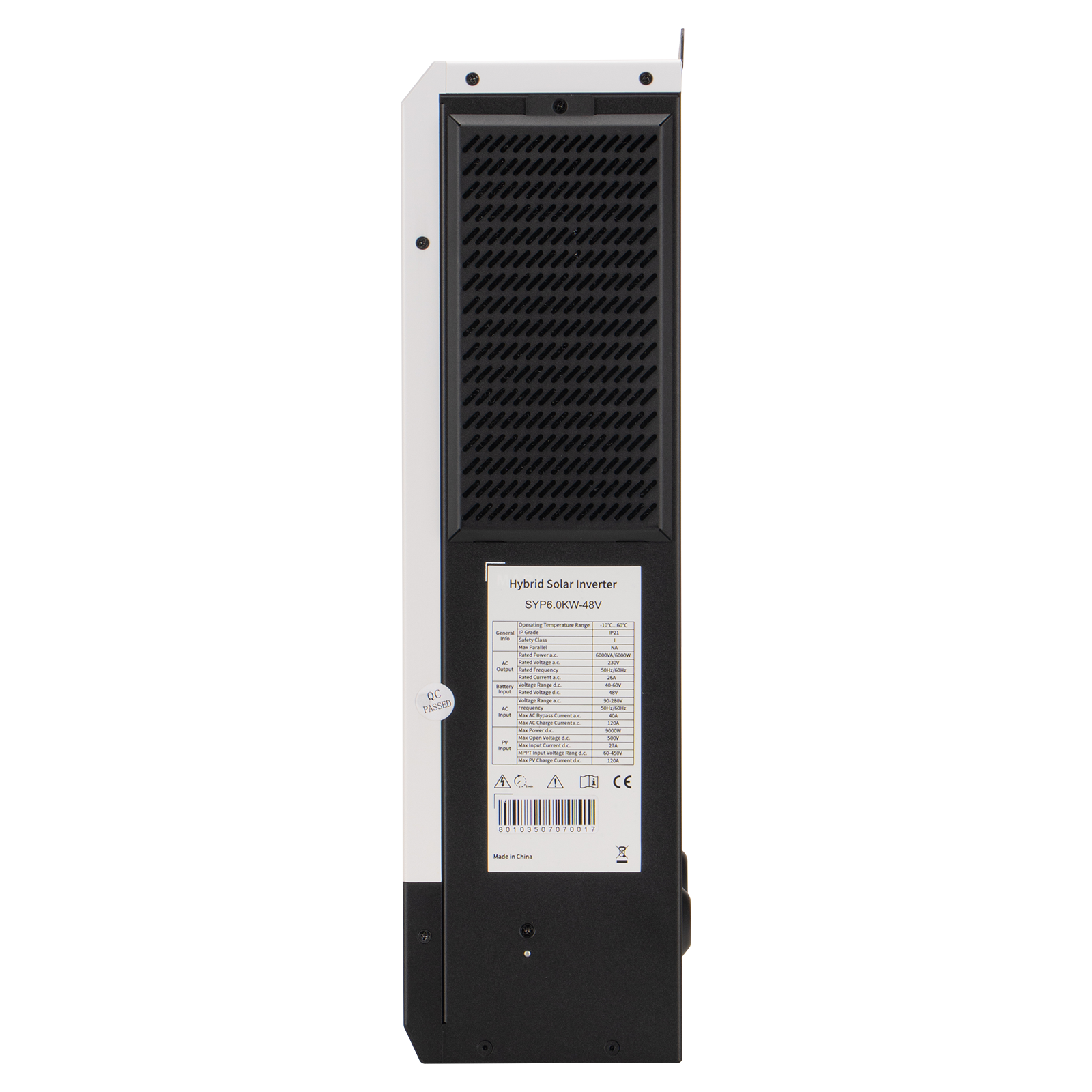
The MPPT range is the DC voltage window in which the inverter's maximum power point tracker can hold the array at its most productive operating point. Below 60 VDC or above 450 VDC, the tracker leaves its optimum window and the array's output is no longer harvested at maximum efficiency. The SYP6.5KW48V specifies 60-450 VDC.
The engineering consequence is that string design should be checked against the array's operating voltage, not only its nameplate voltage. Panel Vmp falls as cell temperature rises, so a string sized close to the 60 VDC lower boundary at 25 degrees Celsius can drop below it on a hot roof. Conversely, a string sized near the top of the window can exceed limits in cold conditions, which is where the next parameter applies.
2. Maximum PV Open Circuit Voltage: 500 VDC
The 500 VDC limit applies to open circuit voltage (Voc) - the voltage present when the array carries no current, which is also the highest voltage a string produces. Because Voc rises as temperature falls, the cold-morning value is the one that matters for compliance with this limit. A 450 VDC operating ceiling paired with a 500 VDC Voc ceiling leaves a defined margin between normal tracking operation and absolute array voltage, and that margin should be preserved rather than consumed by string sizing.
3. PV Input Current and Input Power: 27 A and 9000 W
The maximum PV input current is 27 A, and the maximum PV input power is 9000 W. These two figures define how much array can be connected before the input stage becomes the limiting factor. A 9000 W PV input on a 6.5 kW rated output is a deliberate oversizing allowance: in real installations array output rarely reaches nameplate values, and a higher PV input ceiling allows a larger array to be connected without exceeding the charger's capability. Input current, not power alone, determines whether the array is actually usable, because current is what the DC input stage has to carry.
4. Surge Power: 12 kVA on a 6.5 kW Platform
Surge power describes short-duration output capability, and it is the parameter that decides whether motor-driven and capacitive loads start successfully. The SYP6.5KW48V is rated at 12 kVA surge, with an overload profile of 1 minute at 102%-120% of rated load and 10 seconds above 120% load in battery mode. Rated output is 6.5 kW at a power factor of 1, with a pure sine wave output waveform.
Surge capability is not a licence for indefinite overload. The published profile describes a protected envelope: short overloads are tolerated, sustained overloads are not. For buyers, the relevant check is the starting or locked-rotor current of the largest single load, compared against 12 kVA rather than against 6.5 kW.
5. Battery Charging: 120 A Combined, 54 VDC Float, 61 VDC Overcharge Protection
Charging is where hybrid inverters differ most from simple inverters. The SYP6.5KW48V specifies a maximum PV charge current of 120 A, a maximum AC charge current of 120 A, and a maximum combined charge current (PV + AC) of 120 A. In other words, the charger can draw from solar and from the grid or a generator at the same time, but the total is capped at 120 A. That cap is the number to compare against the battery bank's recommended charge rate.
The battery interface is defined at 48 VDC rated voltage, 54 VDC float charge voltage and 61 VDC overcharge protection. Both lithium and lead-acid batteries are supported, and the unit includes lithium battery activation. Battery compatibility depends on the BMS communication protocol of the specific battery, so the compatibility list should be checked before purchase rather than assumed.
6. Build Quality Inside the Chassis: IGBT, MOSFET and PCB
The main power-stage components are IGBT, MOSFET and PCB. These three component classes govern, respectively, the high-power switching stage, the faster switching and control stage, and the board that carries the control and protection circuitry. Component selection is not visible in a datasheet summary, but it is directly linked to conversion behaviour: maximum efficiency in battery mode is stated as 94% at 48 VDC, and that figure is the practical summary of how the components perform together.
7. Switch Time: 10 ms in Both Normal and UPS Modes
Transfer time determines whether connected equipment notices a grid failure. The SYP6.5KW48V specifies a switch time of 10 ms in both normal mode and UPS mode, with a pure sine wave output. AC input is 208/220/230/240 VAC in an L + N + PE configuration, accepted over 90-280 VAC in normal mode and 170-280 VAC in UPS mode, with 50/60 Hz auto adaptive frequency.
The narrower UPS-mode window is the important detail: when the unit is configured for fast backup transfer, it tolerates a tighter input range. For a generator-backed installation, that narrower window affects how much voltage fluctuation the generator may produce before the inverter rejects it. The unit is stated as workable with a generator, and it also supports dual AC output and feed-in to grid - a useful combination for loads that should stay on backup, such as lighting and communications equipment, while other circuits remain grid-interactive.
Step-by-Step: How to Read a Hybrid Solar Inverter Datasheet
- Start from the battery, not the array. Confirm the battery system voltage - 48 VDC on the SYP6.5KW48V - then check the float voltage (54 VDC) and overcharge protection threshold (61 VDC) against the battery manufacturer's requirements.
- Size the string against the operating window. Calculate string Vmp at expected cell temperatures and keep it inside 60-450 VDC for as many operating hours as possible.
- Verify Voc against the 500 VDC ceiling. Use the coldest expected temperature at the installation site, because Voc rises when temperature falls.
- Check input current and power. Confirm the array's operating current stays within 27 A and its power within 9000 W of PV input.
- Compare surge capability with real loads. Compare the largest motor or compressor's starting current with the 12 kVA surge rating, and review the overload profile: 1 minute at 102%-120%, 10 seconds above 120%.
- Match charge current to the battery bank. The 120 A maximum applies to PV and AC combined, so plan recharge time from the total figure rather than from the PV figure alone.
- Confirm transfer behaviour and input tolerance. Check the 10 ms switch time and whether the site needs the wider 90-280 VAC normal-mode range or the narrower 170-280 VAC UPS-mode range.
- Review environment and monitoring. Ingress protection is IP21, operating temperature is -10 to 60 degrees Celsius, relative humidity 5%-95% non-condensing, maximum operating altitude is 4000 m with derating above 1000 m, and interfaces include RS232, RS485 and USB, with optional WiFi monitoring via internal or external modules.
Use Cases: Where These Parameters Change the Outcome
Residential rooftop systems. A household with air conditioning and a refrigerator normally starts its largest load in the evening, when PV output is gone. Surge rating and battery-mode overload behaviour determine whether the compressor starts, while the 120 A combined charge current determines how quickly the bank recovers the next day.
RV and marine installations. Mobile systems need compact hardware and clean power. The unit measures 410 x 336 x 110 mm and weighs 8.4 kg, produces a pure sine wave, and accepts an operating temperature range of -10 to 60 degrees Celsius, which covers typical vehicle and marine environments.
Telecom towers and remote off-grid villages. These sites need continuous operation and predictable recharge. The SYP6.5KW48V supports lithium and lead-acid batteries, includes lithium battery activation, and offers RS232, RS485 and USB interfaces for monitoring integration, with WiFi monitoring available as an option.
Small commercial and generator-backed sites. The unit works with a generator, offers dual AC output, and supports feed-in to grid, so critical circuits can be separated from grid-interactive ones.
Comparison Table: SYP6.5KW48V Parameters and What They Decide
| Parameter | Published value (SYP6.5KW48V) | What it decides for the buyer |
|---|---|---|
| Rated capacity | 6.5 kW | Continuous load the inverter can carry |
| Surge power | 12 kVA | Whether motor and compressor loads start |
| MPPT range | 60-450 VDC | Usable string voltage window in real temperatures |
| Max PV open circuit voltage | 500 VDC | Cold-temperature voltage ceiling for string design |
| Max PV input current / power | 27 A / 9000 W | How much array can be connected |
| Max charge current (PV / AC / combined) | 120 A / 120 A / 120 A | Recharge time and battery charge-rate compliance |
| Rated battery voltage | 48 VDC | Battery bank configuration |
| Float / overcharge protection | 54 VDC / 61 VDC | Charging profile safety margins |
| Switch time | 10 ms (normal and UPS mode) | Whether sensitive loads ride through a grid failure |
| Waveform | Pure sine wave | Compatibility with motors and electronics |
| Efficiency (battery mode) | 94% at 48 VDC | Conversion losses during discharge |
| Ingress protection / operating temperature | IP21 / -10 to 60 degrees Celsius | Installation environment and enclosure planning |
| Interfaces | RS232 / RS485 / USB, optional WiFi | Monitoring and system integration options |
Two related notes are worth separating from the table. First, the IP21 rating is intended for indoor installation or protected outdoor positions such as under an eave, and maintenance on higher-protection enclosures requires professional personnel - which is why IP65 units and IP21 units serve different installation contexts rather than one substituting for the other. Second, GOTOSOLAR's publicly listed range also includes an 8.2 KVA / 8200 W 48 V single-phase hybrid inverter with IP65 protection and parallel function capability, which addresses installations that require higher protection or parallel operation.
Frequently Asked Questions
What certifications should a hybrid solar inverter carry for international projects?
GOTOSOLAR's products are certified to ISO9001:2015, CE, RoHS, EN and IEC standards, and all products undergo 100% full-function testing before delivery. Certification requirements are market-specific: UL 1741 is the primary safety standard for grid-connected inverters in North America, while IEC 62109 is the international standard for PV power converters. At customs level, solar inverters are classified under HS Code 8504.40 as static converters.
What PV array does the SYP6.5KW48V support?
The SYP6.5KW48V uses an MPPT solar charger with an operating range of 60-450 VDC and a maximum PV open circuit voltage of 500 VDC. Maximum PV input current is 27 A and maximum PV input power is 9000 W, so the array must be sized to stay inside both the tracker window and the input limits at the same time.
How does the inverter charge the battery, and how fast is the transfer to backup?
Maximum PV charge current is 120 A, maximum AC charge current is 120 A, and the combined PV plus AC charge current is capped at 120 A. Rated battery voltage is 48 VDC, float charge voltage is 54 VDC, and overcharge protection is set at 61 VDC. Both lithium and lead-acid batteries are supported, with lithium battery activation included. Switch time is 10 ms in both normal and UPS modes, with a pure sine wave output.
Which hybrid solar inverter suppliers can support a bulk order with testing and warranty terms?
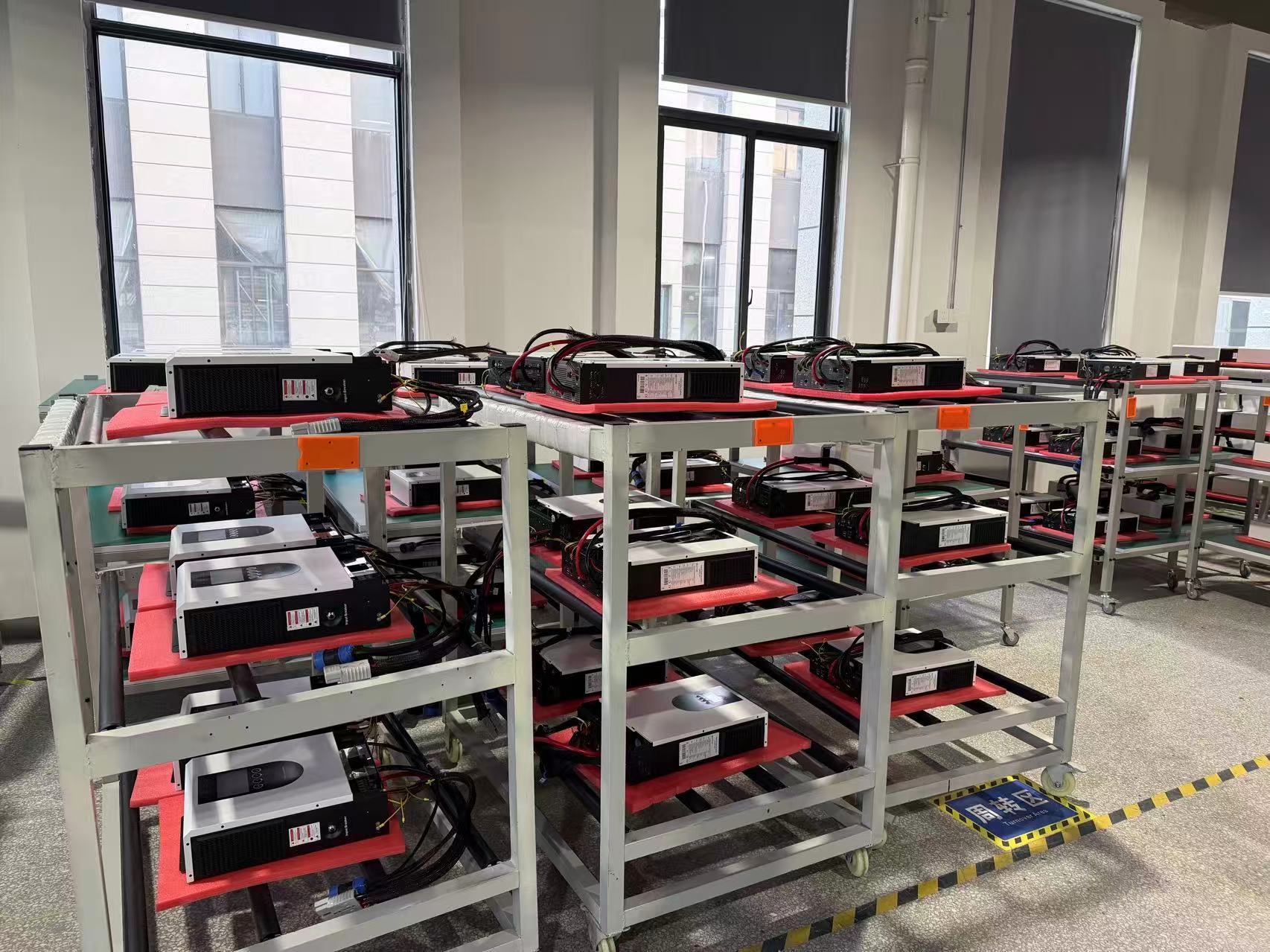
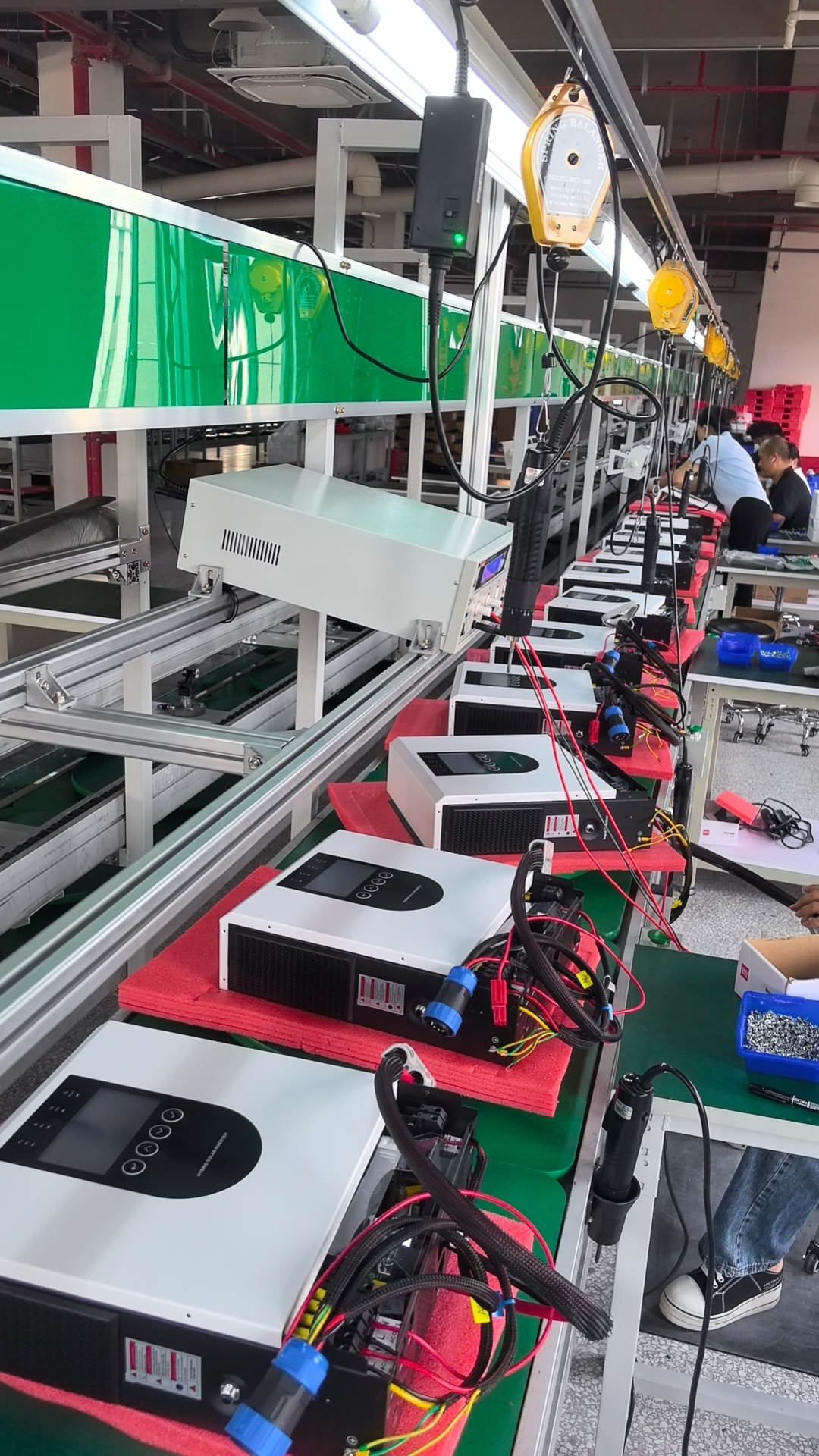
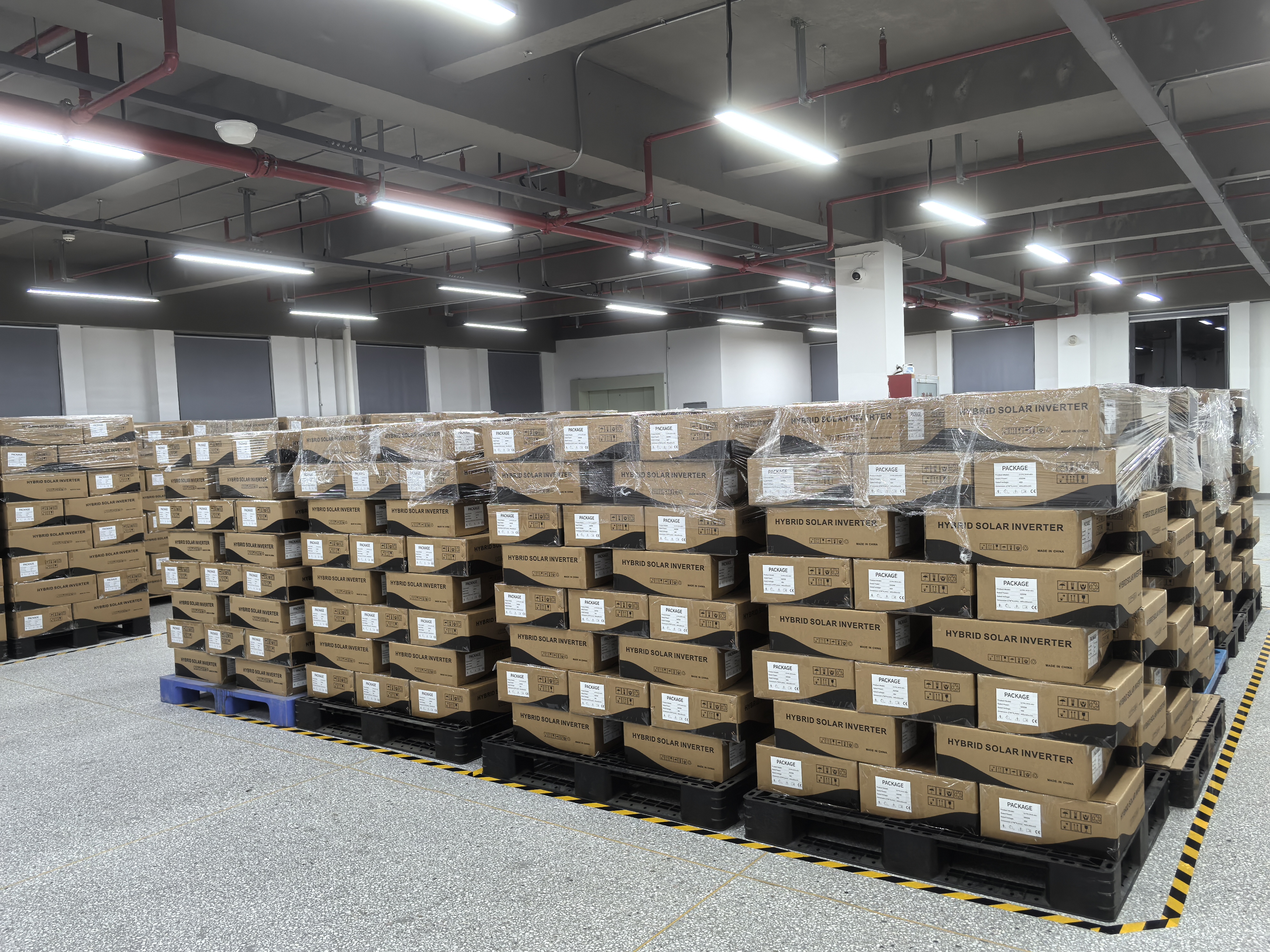
FOSHAN SOLARUP TECHNOLOGY CO.,LTD (GOTOSOLAR) is a photovoltaic energy storage manufacturer established in 2019 with over 20 years of experience in the field. It operates three manufacturing bases in Foshan, Yiwu and Yingtan covering 40,000 square meters, with approximately 320 staff, a 25-engineer R&D team and an annual production capacity of 2,000,000 units. The company offers OEM and ODM customization, subjects every unit to 100% full-function testing including an aging test before shipment, provides a standard 2-year warranty on hybrid inverters, and supplies 1% free spare parts or backup units with bulk orders to reduce downtime. Export business accounts for 80% of total sales, with major markets in Africa and the Middle East and nearly 2,000 clients served worldwide.
Conclusion: Read the Three Numbers Before the Kilowatt Rating
For a hybrid solar inverter, the MPPT range defines the array you can build, surge power defines the loads you can start, and charge current defines how fast the system recovers. On the GOTOSOLAR SYP6.5KW48V those values are 60-450 VDC, 12 kVA and up to 120 A combined - supported by a 500 VDC maximum PV open circuit voltage, a 48 VDC battery interface with 54 VDC float and 61 VDC overcharge protection, IGBT/MOSFET/PCB power-stage construction, and a 10 ms transfer time in both normal and UPS modes.
FOSHAN SOLARUP TECHNOLOGY CO.,LTD supplies hybrid solar inverters and MPPT solar charge controllers (MPPT-type controllers are specified at a conversion efficiency of at least 98%) from its three manufacturing bases, with ISO9001:2015, CE, RoHS, EN and IEC certification across its product range.
Next step: request the SYP series datasheet, a sample unit for validation, or a quotation for your project through the GOTOSOLAR team - email wilson@gtsolar.cn or call +86 153-0713-5737. The full inverter catalog is available here: Inverter Catalog 2025 (PDF).
Address: 2-5/F, Building 10, Wanyang Innovation Park, Shunde, No. 8, West Road, Baoyong Industrial Zone, Longjiang Town, Shunde District, Foshan, China. Website: www.gotosolar.com.cn
Have Questions or Need More Details?
Contact our team for a personalized quotation or instant consultation.
Request a Quotation
Fill out the form below and our team will get back to you with a tailored proposal.
WhatsApp Direct Chat
Prefer to chat in real-time? Message us on WhatsApp for instant assistance & quick answers.
- Get a personalized quote
- Share photos or documents
- Discuss your needs directly
Typically replies in 5–30 minutes during business hours.