Hybrid Solar Inverter CE Compliance Guide: SYP Models and Importer Verification
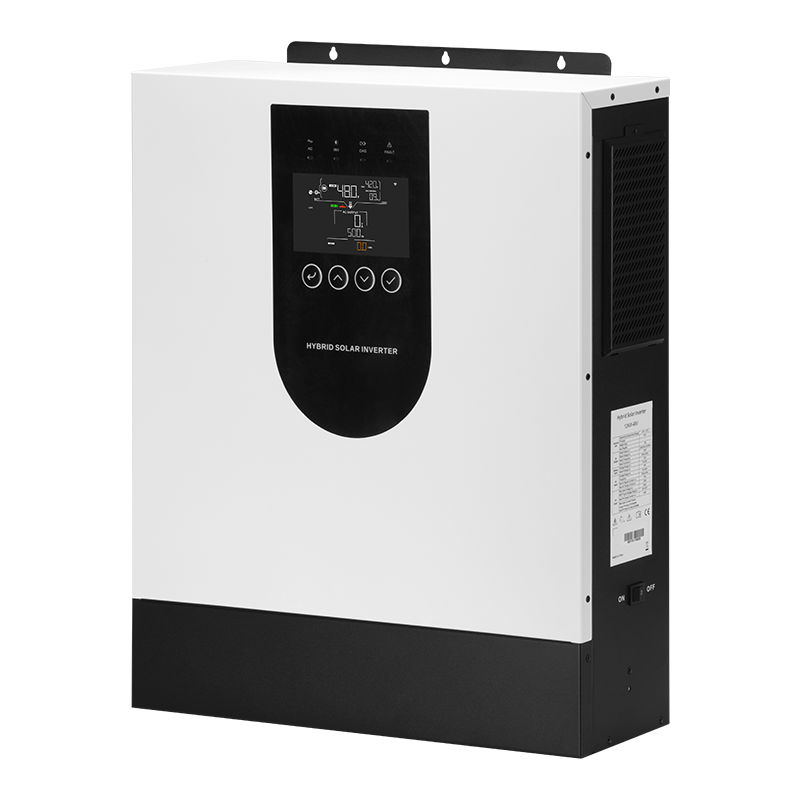
CE is the certification confirmed in the available product facts for the SYP hybrid solar inverter range from GOTOSOLAR (FOSHAN SOLARUP TECHNOLOGY CO.,LTD). Two records carry that position: CE-EMC certificate CTC191J0808101EC, issued by Shenzhen Circle Testing Certification Co., Ltd. (C-CERT), and CE-LVD certificates SZNTC2511142SV00 / SZNTC2511124SV00, issued by Shenzhen Nore Testing Center Co., Ltd. (NTC). Both records are marked for the EU market, and the product is documented as coming with the complete CE certificate.
For an importer, the working question is narrower than whether a certificate exists. It is whether the exact model on the purchase order appears in that certificate's model schedule, and whether the specifications a buyer will actually rely on, rated input voltage, IP21 protection, operating temperature, altitude derating and battery compatibility, are documented in a form that can be handed to a customs broker, a distributor's quality team or an installer. This guide runs both checks in the order an evaluation usually takes them.
Why model-to-document mapping is the real compliance task
A CE certificate does not describe a product category in the abstract. It names a product and the models covered by that record, and it may refer the reader to a schedule for the remaining models. The SYP range is a family of six designations, and the supplied records do not treat all six identically. Where paperwork drifts, for example a variant suffix added on the purchase order, a hyphen inserted or dropped, or a certificate copied from an earlier shipment of controllers, the mismatch is usually created by the buyer's own documents rather than by the product.
That matters because the certificate pack is normally consumed by third parties. A customs broker reads the product description. A distributor's quality department reads the model list against the invoice. An installer reads the electrical ratings before signing off a commissioning sheet. A single unreconciled string, such as a hyphen between SYP and 6.5KW, can stall a tender review even when the physical unit is correct, so the mapping exercise is worth doing once, properly, and keeping with the order file.
The CE evidence that exists for the SYP inverter range
Two certificate records apply to the hybrid solar inverter product. They are separate documents covering separate directive areas, and both are dated and numbered.
| Record | Number | Issued by | Standards named | Market and dates |
|---|---|---|---|---|
| CE-EMC | CTC191J0808101EC | Shenzhen Circle Testing Certification Co., Ltd. (C-CERT) | EN IEC 61000-6-3:2021; EN IEC 61000-6-1:2019; EN IEC 61000-3-2:2019/A1:2021; EN 61000-3-3:2013/A2:2021; EMC Directive 2014/30/EU | EU; issued 2025-09-11; recorded expiry 2099-09-11 |
| CE-LVD | SZNTC2511142SV00 / SZNTC2511124SV00 | Shenzhen Nore Testing Center Co., Ltd. (NTC) | EN 62109-1:2010; EN 62109-2:2011; Low Voltage Directive 2014/35/EU | EU; issue and expiry dates not populated in the supplied record |
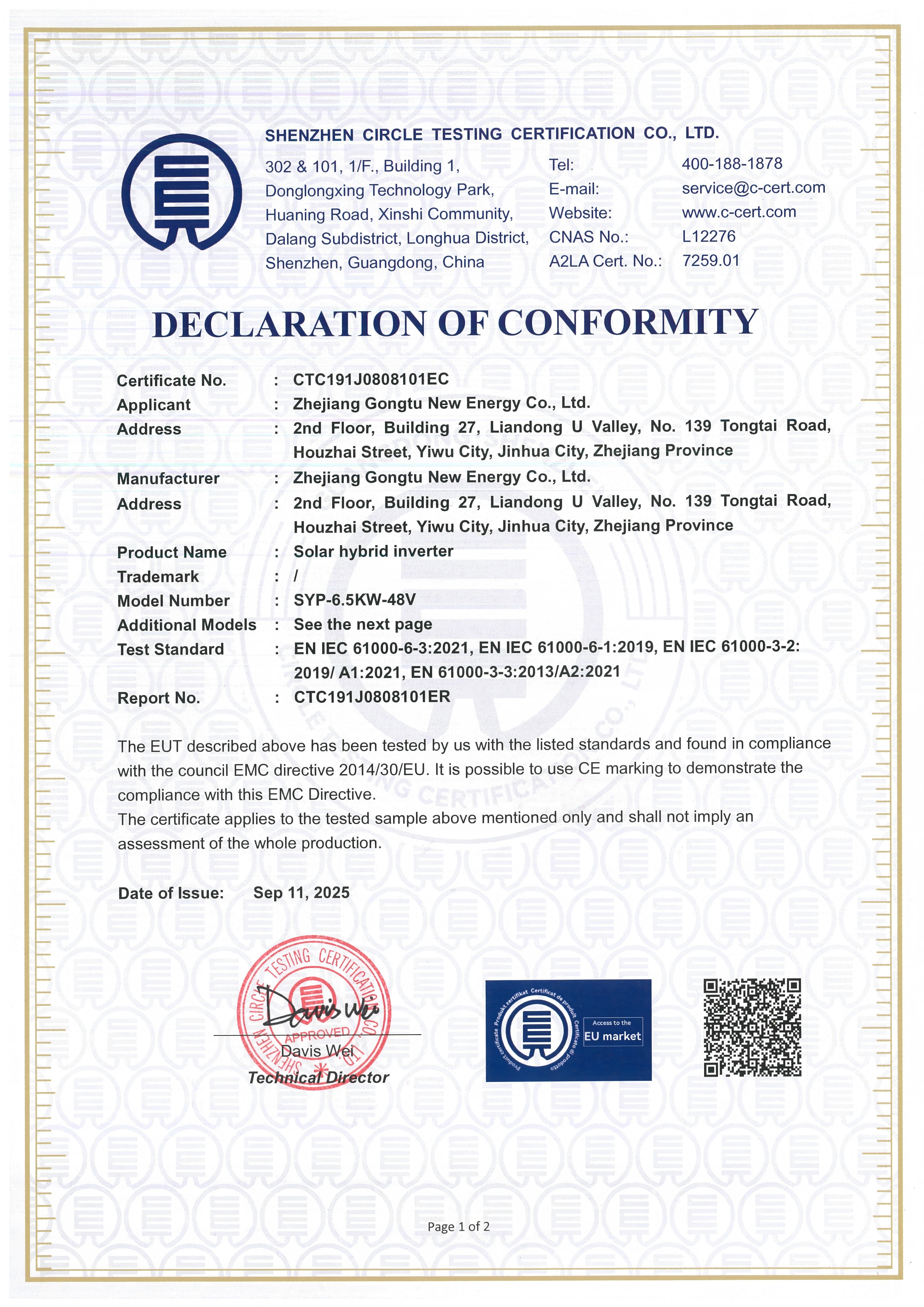
The EMC record's scope reads "Solar hybrid inverter, Model: SYP-6.5KW-48V, additional models see the next page". That single sentence sets the importer's task: the document is only complete when the schedule page is included, because the model schedule is where a 1.5 kW or 12 kW order is matched to the certificate.
Keep controller documents separate. The corpus also holds CE documents for the solar charge controller family: EMC certificate CTC191J1202501EC (EN IEC 61326-1:2021), RoHS certificate CTC191J1202501RC, and LVD certificate SZNTC2411125SV00 (EN 62109-1:2010). Those numbers look close to the inverter numbers but belong to different products. In a mixed container, sending the controller pack in place of inverter evidence is one of the most common documentation errors.
Reading SYP model designations against the certificate schedule
The hybrid solar inverter product record lists six designations: SYP1.5KW12V, SYP2.5KW12V, SYP4.0KW24V, SYP6.5KW48V, SYP12.0KW48V and SYP12.0KW48V/P. The CE-EMC coverage documented in the corpus names five of them, SYP1.5KW12V, SYP2.5KW12V, SYP4.0KW24V, SYP6.5KW48V and SYP12.0KW48V, as certified to CE-EMC for the EU market. The /P variant appears in the product range but not in that documented list, so an order for SYP12.0KW48V/P should be confirmed in writing against the certificate schedule before it is used in a tender submission.
The code itself is readable without a decoder ring: it pairs a capacity figure with a DC voltage figure. SYP6.5KW48V is the 6.5 kW model, and its documented rated battery voltage is 48 VDC, which is consistent with the naming. That consistency is useful for a sanity check but is not a substitute for the schedule, because the 12 V, 24 V and 48 V classes may sit on different series-level documents.
Formatting differences also need to be reconciled rather than argued about. The EMC scope writes the 6.5 kW model as SYP-6.5KW-48V, while the product range writes it as SYP6.5KW48V. Both strings appear in the supplied material, and an importer should obtain written confirmation that they denote the same product configuration, then keep that confirmation filed with the certificate. It is a documentation clarification, not a technical dispute.

Because the LVD record is issued under two certificate numbers and the supplied certificate documents are identified by series rather than by a single model, the practical question is not "do you have EN 62109 certificates" but "which of these documents covers the model I ordered, and can I see that page?". The supplied LVD record also carries no populated issue or expiry date, so a dated certificate copy is a document to request, not to assume.
Specification cross-check: the five points that appear in tender documents
The parameter set supplied for the SYP family is documented around the 6.5 kW model (rated capacity 6.5 kW, surge power 12 kVA). The values below should not be extrapolated to the 1.5 kW, 2.5 kW, 4.0 kW or 12 kW models, each of which needs its own datasheet check. What follows is how each item interacts with the compliance file.
Rated input voltage: 208/220/230/240 VAC, L+N+PE
The documented rated input voltage is 208/220/230/240 VAC with an L+N+PE connection, and the input range is 90~280±3 VAC in normal mode and 170~280±3 VAC in UPS mode, with 50/60 Hz auto-adaptive frequency and ±0.1% output frequency accuracy. For a European site the 230 V nominal sits inside the documented set, so the compliance question is usually whether the site wiring and the supply quality match that declaration, including whether the L+N+PE designation fits the distribution board. The UPS-mode window is narrower than the normal-mode window, which is the number to check when a generator or a weak rural supply feeds the unit.
IP21: an installation constraint, not a marketing line
The documented ingress protection rating is IP21, which indicates protection against solid objects larger than 12.5 mm and vertically falling water drops. It is intended for indoor installation or a protected outdoor position such as under an eave, avoiding direct rain exposure. A garage, utility room or covered plant room is the natural application. If a tender specifies IP65, the IP21 documentation in this file will not satisfy it, and that is a configuration question rather than a paperwork problem, because no certificate upgrades the enclosure rating. Recording the intended mounting position in the technical file closes this point early.
Operating temperature −10 °C to 60 °C, with humidity and storage limits
The documented operating temperature range is −10 °C to 60 °C, the storage range is −15 °C to 60 °C, and relative humidity is 5% to 95% non-condensing. The 60 °C figure is an ambient operating limit, not a target, and a unit installed in a closed cabinet will experience a higher local temperature than the room. Ventilation planning belongs in the installation note. The storage range is also the number to quote to a freight forwarder or a site store, and the non-condensing condition should be carried into the commissioning checklist rather than dropped after purchase.
Altitude: 4000 m maximum, derating above 1000 m
The maximum operating altitude is documented as 4000 m with derating required above 1000 m. This is the parameter most often missed in a European order, because a project in an alpine region or a highland site elsewhere can be well inside the altitude limit while still operating on a derated curve. The certificate does not publish that curve. The importer's action is to request the derating table and apply it to load sizing before the array and battery bank are specified, rather than discovering the margin at commissioning.
Battery compatibility: 48 VDC, lithium and lead-acid, 120 A combined charging
For the 6.5 kW model the documented battery voltage is 48 VDC rated, floating charge voltage 54 VDC, overcharge protection 61 VDC, with support for lithium and lead-acid batteries and lithium battery activation. Maximum charge current is 120 A from PV, 120 A from AC, and 120 A combined, meaning the PV and AC paths together are capped at 120 A rather than adding to 240 A. On the PV side the solar charger is MPPT with a 60–450 VDC MPPT range, 500 VDC maximum PV open circuit voltage, 27 A maximum PV input current and 9000 W maximum PV input power. Battery compatibility itself is decided by the BMS protocol list rather than by the certificate, so that list is a document to request and match to the chosen battery model.
| Parameter | Documented value (6.5 kW model) | Where it sits | Importer action |
|---|---|---|---|
| Rated input voltage | 208/220/230/240 VAC, L+N+PE | Product specification | Match site voltage and wiring; confirm model code on the certificate |
| Input voltage range | 90~280±3 VAC normal; 170~280±3 VAC UPS | Product specification | Check generator or weak-grid supply against the UPS window |
| Ingress protection | IP21 | Product specification | Confirm indoor or protected mounting; IP65 tenders need another configuration |
| Operating temperature | −10 °C to 60 °C | Product specification | Compare with site design temperature; plan ventilation |
| Altitude | 4000 m maximum, derating above 1000 m | Product specification | Request the derating table for sites above 1000 m |
| Battery | 48 VDC rated; float 54 VDC; overcharge protection 61 VDC; lithium and lead-acid; lithium activation | Product specification plus compatibility list | Obtain the battery compatibility and BMS protocol list |
| Charging current | 120 A PV; 120 A AC; 120 A combined | Product specification | Size the battery bank and array to the combined limit |
| CE-EMC | CTC191J0808101EC | Certificate | Verify the exact model appears in the schedule |
| CE-LVD | SZNTC2511142SV00 / SZNTC2511124SV00 | Certificate | Request a dated copy and identify the covering series |
Step-by-step: verifying a SYP certificate pack before a bulk order
- Lock the model string before you quote. Write the exact designation, including any /P suffix, into the purchase order and hold it stable through quotation, proforma and shipping documents.
- Request the complete pack, not the first page. For the inverter that means CE-EMC CTC191J0808101EC with its schedule pages, and CE-LVD SZNTC2511142SV00 / SZNTC2511124SV00.
- Match character by character. Check spelling, hyphenation (SYP-6.5KW-48V against SYP6.5KW48V), the suffix, and whether the certificate's product description of a solar hybrid inverter matches the item on the commercial invoice.
- Identify the covering LVD document. Because the certificate set is organised by series, ask which document covers the model ordered and have that page supplied.
- Ask for the dated LVD copy. The supplied record carries no populated issue or expiry date, and a dated certificate is what a distributor's quality team will ask to see.
- Collect the specification evidence that certificates do not carry. IP21, operating temperature, storage and humidity limits, altitude derating and the battery compatibility list sit in the product documentation, so request them as one bundle.
- Reconcile with the broker. Solar inverters are classified under HS code 8504.40 as static converters in the trade references supplied (Dutiable / USITC); the binding classification decision remains with the destination customs authority, so pass the certificate and the datasheet to the broker instead of interpreting the code yourself.
- Freeze the evidence with the order. Store the certificate copies, schedule page and confirmation emails with the purchase order and inspection records, and re-verify on repeat orders rather than reusing an old attachment.
How the checks change by application
A residential rooftop project in Europe normally turns on the 230 V nominal, an indoor wall position and a battery protocol match. IP21 is workable in a utility room; the certificate schedule and the model string are the two items most likely to hold up a distributor's approval.
An RV or marine installation shifts the emphasis to the enclosure and mounting environment. IP21 assumes a protected position, so a mobile application needs the mounting location defined before the documentation is signed off, and the battery list needs to match the on-board bank.
A commercial, telecom or remote off-grid site adds altitude, ambient temperature and charging current to the review. A highland site above 1000 m needs the derating table, a hot-climate site needs the ventilation and ambient check, and a large battery bank needs the 120 A combined charging limit reflected in the sizing calculation. In each case the certificate answers the conformity question while the specification answers the suitability question, and both are needed.
Regional questions to verify, not assume
The confirmed position is European: the CE-EMC and CE-LVD records are marked for the EU market and name European (EN) standards, with the EMC Directive 2014/30/EU and the Low Voltage Directive 2014/35/EU cited in the records. For any other destination the available facts do not assert compliance, and the honest starting point is a question rather than a claim.
North America shows why. UL Solutions identifies UL 1741 as the primary safety standard for grid-connected inverters in North America and IEC 62109 as the international standard for PV power converters. The SYP documentation in the available facts contains no UL record, so a North American buyer should treat that as an open verification item rather than infer certification from a CE file. Gulf, African, South American and Asia-Pacific markets each have their own regimes; those are questions for the destination authority or the buyer's compliance adviser, not conclusions to be drawn from a European certificate.
Two further points are often confused with CE. RoHS is documented in the available facts for the solar charge controller family, under certificate CTC191J1202501RC, not for the SYP inverter; if a tender requires RoHS evidence for the inverter, raise it as a specific request. And if your market's due diligence asks for a declaration of conformity for the inverter, request that document explicitly, because what the supplied facts confirm are certificates rather than a declaration for this product.
What the CE documentation does not establish
- It confirms conformity with the standards each record names; it is not a performance guarantee for a specific installation or a specific load profile.
- It does not turn IP21 into an outdoor rating, and a protected mounting position remains an installation requirement.
- It does not contain the altitude derating curve, which sits in the product documentation.
- It does not decide battery compatibility, which depends on the BMS protocol list for the chosen battery.
- It does not extend to other product families. Charge controllers and other inverter configurations carry separate documents, so a mixed container needs separate packs.
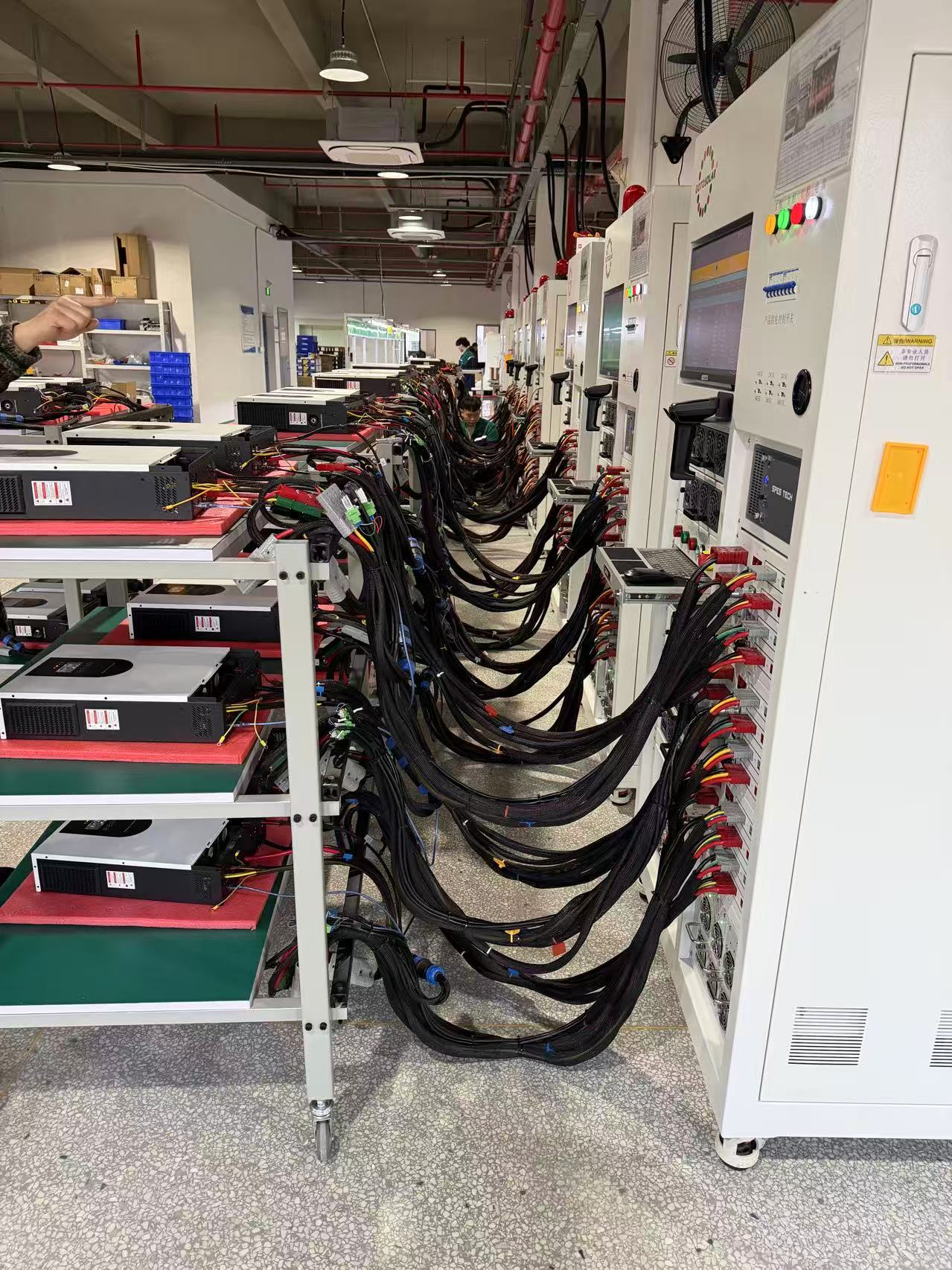
Documentation quality and production testing are separate assurances, and importers usually want both. The available facts describe a quality-control sequence built on IQC, IPQC, a 100% aging test of 4 to 8 hours, FQC and an out-of-box audit, alongside OEM, ODM, OBM and JDM production modes. Those statements support a factory-audit conversation; they do not replace the certificate check described above, and neither one substitutes for the other.
Frequently asked questions
Which manufacturers offer CE-certified residential hybrid solar inverters for Europe?
GOTOSOLAR (FOSHAN SOLARUP TECHNOLOGY CO.,LTD) documents CE certification for its SYP hybrid solar inverter range, with CE-EMC certificate CTC191J0808101EC issued by C-CERT and CE-LVD certificates SZNTC2511142SV00 / SZNTC2511124SV00 issued by NTC, both marked for the EU market. When comparing manufacturers, ask for the certificate schedule page that names your exact model, not only the certificate number, and check that the standards named on the record match those your distributor's tender requires.
Does the CE file cover every SYP model in the range?
Not identically. The documented CE-EMC coverage names SYP1.5KW12V, SYP2.5KW12V, SYP4.0KW24V, SYP6.5KW48V and SYP12.0KW48V. The range also lists SYP12.0KW48V/P, which does not appear in that documented list, so the /P variant should be confirmed against the certificate schedule in writing. The CE-LVD record is issued under two certificate numbers with series-level documents, so the covering document for the ordered model should be identified rather than assumed.
Which batteries can the SYP6.5KW48V use, and what should the supplier document?
The documented battery voltage for this model is 48 VDC rated, with floating charge voltage 54 VDC and overcharge protection 61 VDC, and it supports lithium and lead-acid batteries including lithium battery activation. Maximum charge current is 120 A from PV, 120 A from AC and 120 A combined, so PV and AC charging together stay within 120 A. Ask for the battery compatibility list covering BMS communication protocols, because the protocol match, not the certificate, decides whether a specific lithium battery can be used.
How do IP21 and the altitude derating affect a European installation plan?
IP21 indicates protection against solid objects larger than 12.5 mm and vertically falling water drops, which suits indoor installation or a protected outdoor position such as under an eave and excludes direct rain exposure. The documented maximum operating altitude is 4000 m with derating required above 1000 m, so a highland site inside the limit still needs the derating table applied to load sizing. The operating temperature range of −10 °C to 60 °C should be read as an ambient limit when the mounting position is chosen.
What order terms should be confirmed alongside the certificate?
Minimum order quantity is documented as 10 units for standard models, with trial orders supported, and 100–500 units for customized models depending on tooling cost. Warranty and spare-parts terms are tiered and should be written into the contract rather than taken from a summary page. Confirm the exact model string, the certificate schedule page, the battery compatibility list and the packaging and manual language in the same exchange, so the compliance file and the commercial file describe the same product.
Can I get a sample and the certificate pack before committing to a bulk order?
Yes. Documented lead times are 7–10 days for samples, 15–20 days for orders under 500 pieces and 30–45 days for bulk orders, with timing depending on customization complexity. A sample order is also the practical moment to test the BMS protocol with your chosen battery and to confirm the IP21 mounting plan for your market. You can request the certificate pack, the battery compatibility list and the inverter catalogue through GOTOSOLAR; the current catalogue is available as a PDF download.
Conclusion
CE compliance for the SYP hybrid solar inverter range rests on two identifiable records: CE-EMC certificate CTC191J0808101EC from C-CERT against the EN IEC 61000 series under the EMC Directive 2014/30/EU, and CE-LVD certificates SZNTC2511142SV00 / SZNTC2511124SV00 from NTC against EN 62109-1:2010 and EN 62109-2:2011 under the Low Voltage Directive 2014/35/EU. CE is the confirmed certification in the available facts; everything else is a verification question.
The verification itself is unglamorous and entirely doable: match the model string including the /P suffix, obtain the schedule and the dated LVD copy, cross-check the rated input voltage of 208/220/230/240 VAC and the L+N+PE connection against the site, treat IP21 as an indoor or protected-position constraint, apply the derating rule for sites above 1000 m, and confirm battery compatibility through the BMS protocol list rather than through the certificate. Importers who complete those five checks before a bulk order usually find that the remaining questions are commercial ones, and they have the documents on file to answer them.
Have Questions or Need More Details?
Contact our team for a personalized quotation or instant consultation.
Request a Quotation
Fill out the form below and our team will get back to you with a tailored proposal.
WhatsApp Direct Chat
Prefer to chat in real-time? Message us on WhatsApp for instant assistance & quick answers.
- Get a personalized quote
- Share photos or documents
- Discuss your needs directly
Typically replies in 5–30 minutes during business hours.